Last month, the world marked the International Day of Biological Diversity at an extraordinary moment when political will, global targets, funding, and capacity are aligned to scale up protected and conserved areas globally.
The global target to protect 30% of the world’s oceans by 2030 is on course to fail unless governments place human rights at the centre of marine conservation policy, Greenpeace International has warned in a new report published today.
This dataset delineates the Western and Central Pacific Fisheries Commission (WCPFC) Convention Area, representing the regulatory boundary established under the Convention on the Conservation and Management of Highly Migratory Fish Stocks in the Western and Central Pacific Ocean (2000).
This dataset delineates the North Pacific Fisheries Commission (NPFC) Convention Area, representing the regulatory boundary established under the Convention on the Conservation and Management of High Seas Fisheries Resources in the North Pacific Ocean (2012).
This dataset delineates the Inter-American Tropical Tuna Commission (IATTC) Convention Area, representing the regulatory boundary established under the Antigua Convention (2003).
This dataset delineates the Game Fishing Zone within the Niue Moana Mahu Marine Protected Area (MPA). The Moana Mahu MPA, established to protect Niue's unique marine environment, includes designated zones for different levels of protection and permitted activities.
This dataset delineates the 50 Nautical Mile Protected Zone within the Cook Islands Marae Moana Marine Protected Area, established under the Marae Moana Act 2017 (No. 10).
This dataset delineates the Kiribati Marine Protected Area (MPA), representing a designated marine zone established to conserve and protect marine ecosystems, habitats, and species within Kiribati's waters.
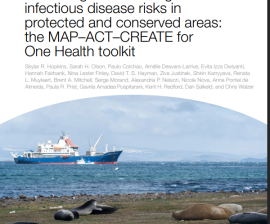
Protected and Conserved Areas (PCAs) safeguard biodiversity and provide essential ecosystem services for human and animal health, from water filtration to climate regulation. Yet PCAs can also be places where infectious diseases can emerge or spread among people, wildlife, and domestic animals.