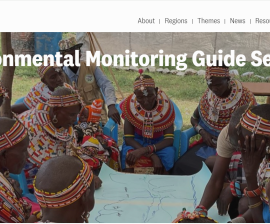
The Transformative Pathways project has created a series of four guides on environmental monitoring, both for local organisations who are supporting Indigenous Peoples and local communities, and for communities themselves.
Watch this new film and join Mareva and her community as they learn about marine spatial planning in the Pacific. They witness a ship running aground and damaging their local reef. Then they become motivated to speak up about protecting their island and the ocean around it!
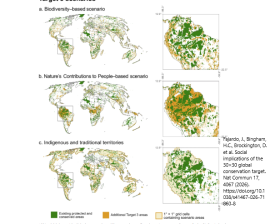
Places where nature thrives outside of protected areas have huge potential to help the world achieve the global pledge to conserve 30% of Earth’s lands and waters by 2030 A sacred forest in India. A community-managed fishery in the Philippines. A military training ground in Europe.
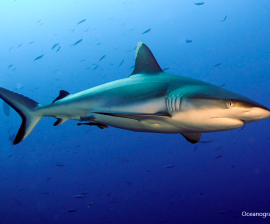
The world’s leading marine scientists have issued a stark warning that many shark and ray populations risk declining beyond recovery within our lifetimes unless immediate global political action is taken.
As the global community accelerates efforts towards the 30x30 target — protecting 30% of the ocean by 2030, as agreed under the Convention of Biological Diversity — marine conservation has entered a decisive phase.
Stronger shark conservation policies across China could – in effect – save the species from extinction, is the argument being levelled at the United States via a petition asking the US to better hold China accountable for failing to meet basic conservation standards.
For a realm that covers most of the planet, the ocean attracts a modest share of charitable attention. In philanthropic terms, it remains a niche cause: widely discussed, but thinly financed. That gap has narrowed in recent years, though only slightly and from a low base.