This document has been prepared by SPREP with input from Pacific Islands Roundtable for Nature Conservation (PIRT) and CROP partners. The document provides broad guidance for Pacific representatives participating at the Global Nature Positive Summit.
One of the main objectives of the biodiversity COP16 was agreement on financial means for the implementation of the Kunming-Montreal Global Biodiversity Framework (GBF), the landmark “Paris Agreement for nature” deal made at COP15 in Montreal in 2022.
This desktop study is focused on presenting known and available baseline data on alien and invasive species and key biodiversity of Pitcairn which will inform stakeholders during the development of the Territorial Invasive Species Strategy and Action Plan (TISSAP).
Marine litter is a growing global problem that impacts biodiversity and human societies alike. South-east Asis suffers significant impacts due to high biodiversity, dense human populations, and larger volumes of plastics entering the marine environment, primarily through rivers.
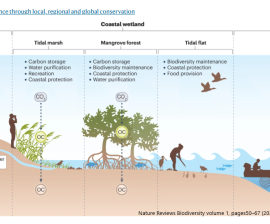
Many people are familiar with the idea of a protected area—land or water areas set aside and kept as natural as possible, such as national parks and nature reserves. Protected areas are one of the most well-established conservation tools, playing a crucial role in protecting biodiversity.
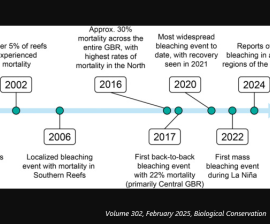
Predicting coral bleaching events has been key to reef conservation management efforts. Current satellite-based bleaching prediction tools offer effective regional-scale alerts of bleaching risk, but lack reliability at the reef-scale.
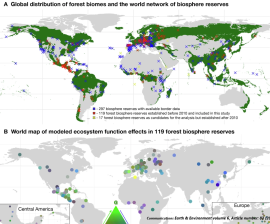
UNESCO biosphere reserves serve as learning areas for sustainable development, where preserving ecosystem functionality is an imperative. However, this critical assumption has yet to be thoroughly examined.
Traditional Ecological Knowledge (TEK) is lost due to the increase of urbanisation, and the lack of transfer of this knowledge to younger generations. Aims.