Protected and Conserved Areas (PCAs) safeguard biodiversity and provide essential ecosystem services for human and animal health, from water filtration to climate regulation. Yet PCAs can also be places where infectious diseases can emerge or spread among people, wildlife, and domestic animals.
Watch this new film and join Mareva and her community as they learn about marine spatial planning in the Pacific. They witness a ship running aground and damaging their local reef. Then they become motivated to speak up about protecting their island and the ocean around it!
Places where nature thrives outside of protected areas have huge potential to help the world achieve the global pledge to conserve 30% of Earth’s lands and waters by 2030 A sacred forest in India. A community-managed fishery in the Philippines. A military training ground in Europe.
Drawing on the Kunming–Montreal Global Biodiversity Framework's Target 3 and the Ramsar Convention, this briefing note examines the synergies between Ramsar Site designations and OECM recognition, and what these mean for freshwater and coastal ecosystems.
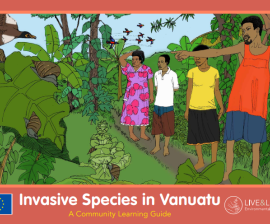
The Invasive Species in Vanuatu resources aim to limit the spread and ecological impact of invasive plant and animal species in the islands of Vanuatu.
GBIF Conversion MDTThis installation of the GBIF Metabarcoding Data Toolkit (MDT) is available for processing real datasets when no other full-featured MDT installation is available.
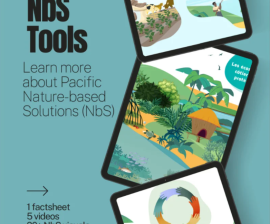
To celebrate its fifth anniversary, the Kiwa Initiative is launching a bilingual (French/English) awareness campaign aimed at strengthening understanding of Nature-based Solutions (NbS) among Pacific communities and practitioners.
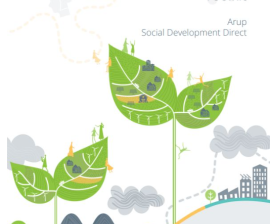
The Gender-responsive Nature-based Solutions (NbS) Toolkit provides a comprehensive framework and practical guidance for integrating gender-responsive strategies into the planning, implementation, and management of NbS. Developed by Arup and Social