Key Biodiversity Areas (KBAs) are the most important places in the world for species and their habitats. Faced with a global environmental crisis we need to focus our collective efforts on conserving the places that matter most. The KBA Programme supports the identification, mapping, monitoring and conservation of KBAs to help safeguard the most critical sites for nature on our planet – from rainforests to reefs, mountains to marshes, deserts to grasslands and to the deepest parts of the oceans.
Practice Standards for Debt Conversion Projects for Nature, Resilience, and People
Today the world faces three interconnected crises: biodiversity loss, climate change, and unsustainable debt, each greatly exacerbating the other.
Preserving paradise: the value of protecting Papua New Guinea's forests for climate
Papua New Guinea (PNG) hosts some of the world's largest and last remaining intact forest landscapes.
Principles for Community-Based Marine Conservation in the Indo-Pacific.
Parks, J, Aalbersberg, W and Salafsky, N (editors). 2001. Principles for Community-Based Marine Conservation in the Indo-Pacific. University of the South Pacific Press. Suva, Fiji.
Principles for Ecosystem Restoration to Guide the United Nations Decade 2021-2030
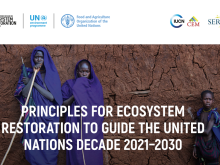
Aware of the critical need to halt, prevent and reverse ecosystem degradation, and to effectively restore degraded terrestrial, freshwater and marine ecosystems across the globe, through Resolution 73/284, the United Nations General Assembly declared 2021–2030 as the United Nations Decade on Ecos
Protect and restore: integrating marine management to secure the future of coastal ecosystems
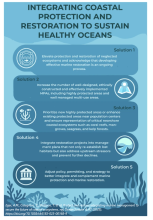
We must integrate effective protection with scalable restoration to ensure resilient coastal ecosystems.
Protected Area Governance and Management
The world’s more than 200 000 protected areas come in many forms, on land and at sea, and occur in every country (Bertzky et al. 2012). They are places that people establish to conserve natural and cultural heritage and to sustain their benefits for society.
Protected Area Governance and Management
This book has been prepared as a contribution to the IUCN World Parks Congress in Sydney in 2014. The global community is at the interface of ensuring the quality of protected area governance and management, together with the way that effectively managed and
Protected area management has significant spillover effects on vegetation
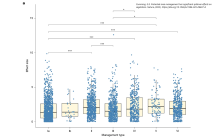
The Kunming–Montreal Global Biodiversity Framework calls for rapid global expansion of protected areas in response to ongoing biodiversity loss and ecosystem degradation1. One of its strongest selling points is the benefits protected areas provide to adjacent human communities2,3.
Protected Area Network Expansion and Management: Economics to improve conservation outcomes
This paper identifies the Dasgupta Review’s key points about the role of protected areas (PAs) in conserving nature.
Protected areas expanding fast but failing to halt nature loss, studies warn
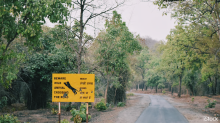
New research suggests that the rapid expansion of protected areas worldwide is giving a misleading picture of progress, with biodiversity continuing to decline inside many sites designated for protection.
Protected Planet Report 2020
We are entering an era of unparalleled opportunity to address the global crisis facing nature.
Protecting Blue Corridors

Whales and dolphins rely on critical ocean habitats – areas where they feed, mate, give birth, nurse young, socialize, and migrate – for their survival. These areas are connected by migratory pathways known as blue corridors, essential to their life cycle.
Protecting the right 30% by 2030: Are We Ready to Deliver?
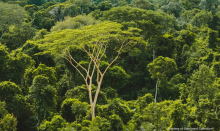
Last month, the world marked the International Day of Biological Diversity at an extraordinary moment when political will, global targets, funding, and capacity are aligned to scale up protected and conserved areas globally.
Quality of marine protected areas is critical to achieving global biodiversity targets
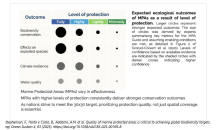
Summarising CBD target 3 to “30 × 30” emphasizes area coverage, but conservation success depends on MPA quality. Many existing MPAs are under-protected, and rapidly designating new areas risks creating ‘paper parks’ without ecological or social benefits.
Quantifying tropical forest rainfall generation
Tropical forests enhance regional rainfall but a robust analysis of this benefit is lacking. Consequently, the rainfall generating services of tropical forests are rarely accounted for in policymaking.
Rapid Assessment and Prioritization of Protected Area Management (RAPPAM) Methodology
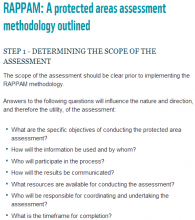
Ervin, J. 2003. Rapid Assessment and Prioritization of Protected Area Management (RAPPAM) Methodology. WWF, Gland, Switzerland.
Rapid Biodiversity Assessment (BIORAP) Nauru (June 2013) - Synthesis Report : Key findings and recommendations
A BIORAP is a biological inventory programme undertaken in marine and terrestrial environments, and is designed to rapidly assess the biodiversity of highly diverse areas.
Rapid Biodiversity Assessment (BIORAP) of Republic of Nauru
The purpose of the Nauru BIORAP was to improve the state of knowledge of marine and terrestrial ecosystems, to provide a scientific basis for the conservation and management of nationally, regionally and globally important ecosystems and species.
Rapid Biodiversity Assessment (BIORAP) of the Vava'u Archipelago, Kingdom of Tonga (February 2014) - Full Report
The Biological Rapid Assessment Programme (BIORAP) is a biological survey based on a concept developed by Conservation International and designed to use scientific information to catalyse conservation action.
Rapid Biodiversity Assessment (BIORAP) Vava'u Group - Kingdom of Tonga (February 2014) - Synthesis Report : Key findings and recommendations
A BIORAP is a biological inventory programme undertaken in marine and terrestrial environments, and is designed to rapidly assess the biodiversity of highly diverse areas.
Rapid biodiversity assessment of key biodiversity areas: Falealupo peninsula coastal rainforest, central Savaii rainforest, and Uafato-Tiavea costal rainforest, Samoa
A Biological Rapid Assessment Program (BIORAP) was conducted from July 16 to August 3, 2016 in three Key Biodiversity Areas (KBAs) in Samoa: the Central Savai’i Rainforest KBA, and the Falealupo Peninsula Coastal Rainforest KBA on Savaii; and the Uafato-Tiavea Coastal Rainforest KBA on Upolu.
Rapid Biodiversity Assessment of Upland Savai'i, Samoa (BIORAP)
his BIORAP (Biological Rapid Assessment Program) survey was undertaken as part of the process to facilitate improved management of the forests and biodiversity of Upland Savaii.
Rapid Biodiversity Assessment of Upland Savai'i, Samoa (BIORAP)
This BIORAP (Biological Rapid Assessment Program) survey was undertaken as part of the process to facilitate improved management of the forests and biodiversity of Upland Savaii.
Rapid Biological Assessments of the Nakanai Mountains and the upper Strickland Basin: surveying the biodiversity of Papua New Guinea’s sublime karst environments
The independent state of Papua New Guinea (PNG) occupies the eastern half of New Guinea, the world’s largest and highest tropical island and one of the last major tropical wilderness areas on earth.
Rarotonga fringing reef survey, 2003 report
This report has been prepared on behalf of the Environment Service, Cook Islands as part of an ongoing monitoring programme of reef health of the fringing reef of Rarotonga.
Realising the Healthy Islands Vision through Cross-Sector, Planning, Data and Action : Policy Brief
Fiji and other Pacific Island Countries face a high risk of communicable disease outbreaks caused by endemic, emerging and re-emerging disease, which are influenced by social, economic and ecological changes. Call Number: [EL]Physical Description: 2 p.
Realising the Healthy Islands Vision through Cross-Sector, Planning, Data and Action : Policy Brief
Fiji and other Pacific Island Countries face a high risk of communicable disease outbreaks caused by endemic, emerging and re-emerging disease, which are influenced by social, economic and ecological changes.
Recovery Plan 2020-2029 Manumea | Tooth-Billed Pigeon (Didunculus strigirostris)

The critically endangered Manumea or Tooth-billed pigeon is found only in Samoa and is highly significant in its cultural heritage. The pigeon only lives within and on the edges of intact mature native forest.
Reducing disease risks in protected areas: New toolkit launched to safeguard human, wildlife and ecosystem health
Protected and Conserved Areas (PCAs) safeguard biodiversity and provide essential ecosystem services for human and animal health, from water filtration to climate regulation. Yet PCAs can also be places where infectious diseases can emerge or spread among people, wildlife, and domestic animals.
Reef restoration shouldn’t just be about growing corals - but also bringing reefs to life, new study suggests
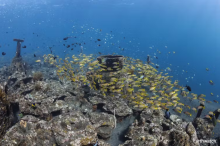
Over the past twenty years, coral reef restoration has seen unprecedented growth worldwide. From Indonesia to the Caribbean, thousands of projects have been launched with the goal of “saving” coral reefs - often by planting coral fragments or building artificial reef structures.
Reef-Fidelity and Migration of Tiger Sharks, Galeocerdo cuvier, across the Coral Sea
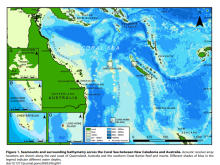
Knowledge of the habitat use and migration patterns of large sharks is important for assessing the effectiveness of large predator Marine Protected Areas (MPAs), vulnerability to fisheries and environmental influences, and management of shark–human interactions.
Regional Marine Protection Priorities, Pacific BioScapes Programme - Fiji, Palau and Vanuatu
The Pacific BioScapes Programme aims to identify and strengthen the management of Key Biodiversity Areas (KBA) in the Pacific region. These areas are 'sites contributing significantly to the global persistence of biodiversity’, in terrestrial, freshwater and marine ecosystems.
Relative abundance and diversity of sharks and predatory fishes across Marine Protected Areas of the Tropical Eastern Pacific
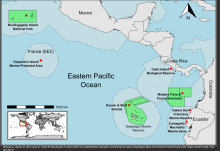
Marine Protected Areas (MPAs) in the Tropical Eastern Pacific (TEP) support globally distinct reef fish populations, which exhibit differences between the remote oceanic islands and continental coast.
Remote sensing techniques for mapping and monitoring mangroves at fine scales
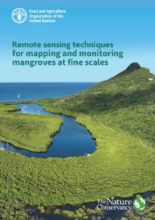
Mangrove ecosystems play a critical role in harbouring biodiversity and providing a variety of ecosystem services. The need for developing better techniques for classifying and monitoring mangroves is increasing, especially with the growing demand in blue carbon markets.
Report of the annual meeting of the South Pacific whale research consortium, 9th February - 12th February 2009, Auckland, New Zealand
Members of the South Pacific Whale Research Consortium met at the University of Auckland from 8-12 February, 2009 to discuss (i) the results of fieldwork and analysis conducted during 2008 and, (ii) conservation initiatives in the region.
Report of the Third (3rd) South Pacific National Parks & Reserves Conference, Apia, Western Samoa, 24 June - 3 July 1985 : conference report (Vol. 4) : report on conference arrangements
In recognition of the need for National Parks and protected areas in the South Pacific, the New Zealand Government hosted the First South Pacific Conference on National Parks and Reserves in 1975, in association with the South Pacific Commission (SPC) and the International Union for the Conservat
Report of the Third (3rd) South Pacific National Parks & Reserves Conference, Apia, Western Samoa, 24 June - 3 July 1985 : conference report (Vol. 4) : report on conference arrangements
In recognition of the need for National Parks and protected areas in the South Pacific, the New Zealand Government hosted the First South Pacific Conference on National Parks and Reserves in 1975, in association with the South Pacific
Report on baseline data from permanent monitoring sites and community based monitoring trials, Aleipata district
Baseline monitoring was carried out in two complementary programs : establishment of Permanent Monitoring Sites conducted by the Project Team, and trials of a Community Based Monitoring Program undertaken with village volunteers who will monitor their respective No-Take areas on a more frequent b
Report on baseline data from permanent monitoring sites and community based monitoring trials, Aleipata district

Baseline monitoring was carried out in two complementary programs : establishment of Permanent Monitoring Sites conducted by the Project Team, and trials of a Community Based Monitoring Program undertaken with village volunteers who will monitor their respective No-Take areas on a more frequent b
Report on the 2016 Funafuti Community-based Ridge-To-Reef (R2R). Rapid biodiversity assessment of the conservation status of biodiversity and ecosystem services (BES) in Tuvalu.
This report presents the results of the 2016 Funafuti Community-Based Ridge-to-Reef (R2R) Rapid Biodiversity Assessment (BIORAP) of biodiversity and ecosystem services (BES), hereafter referred to as the BIORAP.
Reptiles and Amphibians of the Trans-Fly Region, New Guinea
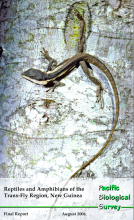
There are 102 species of reptiles and 25 species of frogs known from the Trans-fly region. 29 of the reptiles and one of the frogs are of special conservation concern. Seven of these species are of high conservation concern: 2 turtles, a monitor lizard, three snakes, and one frog.
Reshaping Natural Resource Management in Papua New Guinea
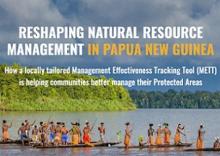
The growing need for effective tools and new approaches for natural resource management (NRM) is being met by PNG’s NRM Hub initiative, which is already helping to centralise environmental data and make it accessible to stakeholders everywhere.
Responsible marine wildlife viewing guidelines: a guide to industry best practice for viewing marine wildlife in the Pacific.
This guideline provides practical, science-based information for tourism operators and tourism regulators who want to offer the best possible experience to their customers, while conserving species and habitats and making a positive contribution to local communities.
Restoration by HER: Gender-responsive approaches to ecosystem restoration across global landscapes
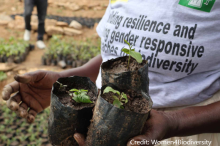
Ecosystem restoration is recognised as a key strategy for confronting the dual crises of climate change and biodiversity loss. The United Nations Decade on Ecosystem Restoration (2021-2030)1 sets an ambitious agenda to restore degraded ecosystems worldwide (FAO et al., 2021).
Rethinking the 30 by 30 target to ensure the well-being of small-scale fishing communities
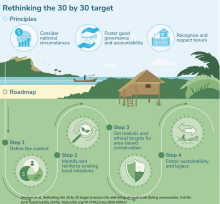
Target 3 of the Convention on Biological Diversity’s (CBD) Kunming-Montreal Global Biodiversity Framework calls for the protection of 30% of terrestrial areas, inland waters, and marine and coastal areas through area-based conservation (protected areas and other effective conservation measures) b
Revenues for Nature Guidebook Series Nature-based Models for Unlocking Private Investment into Freshwater (Expanded Edition)
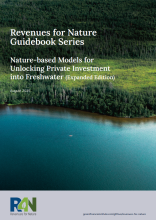
The R4N Guidebook Series provides an in-depth analysis of models across the globe that unlock private sector capital into nature restoration or protection, including nature-based solutions (NbS).
Review and Recommendations Regarding Human Activity Surveillance Technologies in Pacific Marine Protected Areas
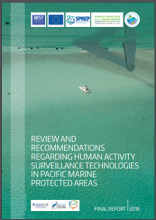
The present study, commissioned by the French Agency for Biodiversity (Agence française pour la biodiversité, AFB), is part of the "Pacific Biodiversity Blue Belt" project.
Review of Cetacean Diversity Status and Threats in the Pacific Island Region
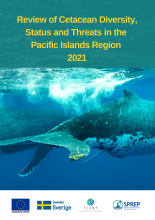
This report brings together information on the status of and threats to whales and dolphins in the Pacific Islands region.
Review of legislation, policies, strategies and plans relating to the development of marine protected areas in Fiji
Fiji is committed to the sustainable use of its marine resources and conserving its marine biodiversity. This commitment has been ratified through Fiji’s international responsibilities and obligations under the United Nations Convention on Biological Diversity (UNCBD).