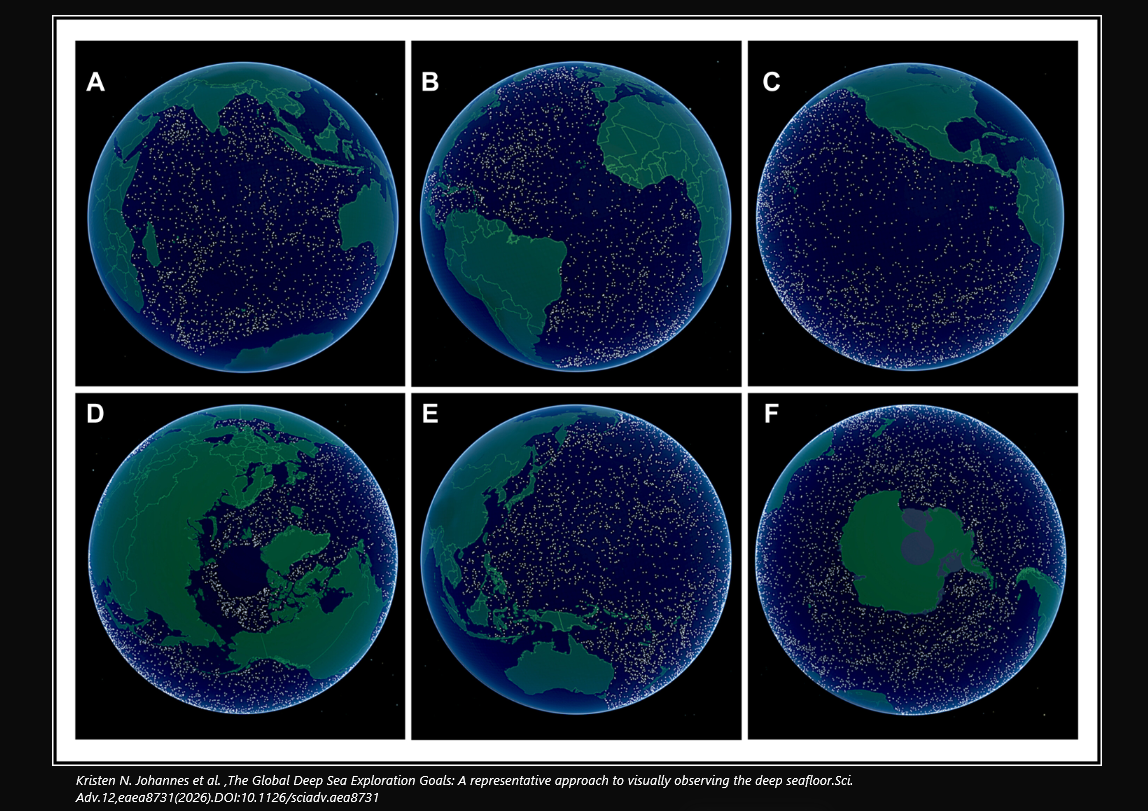
The Global Deep Sea Exploration Goals strategy is a spatially balanced, probability-based, actionable global sampling design identifying 10,000 target locations for deep-sea visual observation (≥200 m). This sampling approach integrates four seafloor characteristics: bathymetry, geomorphology, sediment composition, and particulate organic carbon flux, while accounting for documented historical deep-submergence deployments. It aims to correct for historical observational biases across factors such as depth zones, ocean basins, geomorphology, and maritime jurisdictions. These proposed targets will nearly double the number of unique observed seafloor locations, establishing a more geographically and environmentally representative dataset. This globally distributed sampling design also highlights critical scientific gaps in underexplored regions, guiding both exploration and capacity-building priorities. By aligning with and amplifying complementary global initiatives in mapping and sampling, this effort lays the foundation for a more inclusive, coordinated, and statistically representative approach to deep-ocean science, which is essential for informed policy and sustainable resource management.