Principles for designing marine protected area (MPA) networks that address social, economic, and biological criteria are well established in the scientific literature.
The evaluation of management effectiveness is generally achieved by the assessment of series of criteria (represented by carefully selected indicators) against agreed objectives or standards.
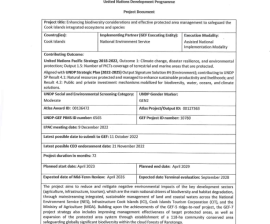
Official project document for the Cook Islands national project under GEF-7 programming, project title: Enhancing Biodiversity considerations and effective protected area management to safeguard the Cook Islands integrated ecosystems and species. Annexes not in
Traditional Ecological Knowledge (TEK) is lost due to the increase of urbanisation, and the lack of transfer of this knowledge to younger generations. Aims.
We present an initial exploration of why and how participation in a case of community-based resource management (CBRM) in a Pacific context could be considered a deviation from gender norms.
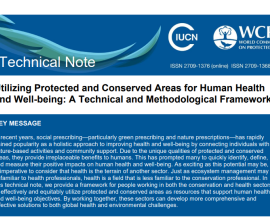
In recent years, social prescribing—particularly green prescribing and nature prescriptions—has rapidly gained popularity as a holistic approach to improving health and well-being by connecting individuals with nature-based activities and community support.
Based on original ethnographic and ethnobotanical research, we share how in the cosmology of Tanna, an island in Vanuatu’s southernmost province of Tafea, the Sun is viewed as a living, interactive being.