The commitment to protect 30% of the Earth’s terrestrial, inland water, coastal and marine areas by 2030 under the Kunming-Montreal Global Biodiversity Framework has seen growing attention paid to ‘other effective area-based conservation measures’ (OECMs) to help achieve this target.
Transoceanic dispersal to far-away islands is an important mechanism for the generation of new species lineages and biotas and has captivated scientists since at least the time of Darwin.
Based on original ethnographic and ethnobotanical research, we share how in the cosmology of Tanna, an island in Vanuatu’s southernmost province of Tafea, the Sun is viewed as a living, interactive being.
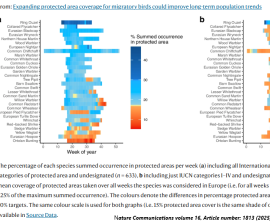
Populations of many migratory taxa have been declining over recent decades. Although protected areas are a cornerstone for conservation, their role in protecting migratory species can be incomplete due to the dynamic distributions of these species.
Join Mareva and her community as they learn about marine spatial planning in the Pacific. In this comic book, they witness a ship running aground and damaging their local reef.
This document has been prepared by SPREP with input from Pacific Islands Roundtable for Nature Conservation (PIRT) and CROP partners. The document provides broad guidance for Pacific representatives participating at the Global Nature Positive Summit.
One of the main objectives of the biodiversity COP16 was agreement on financial means for the implementation of the Kunming-Montreal Global Biodiversity Framework (GBF), the landmark “Paris Agreement for nature” deal made at COP15 in Montreal in 2022.
This desktop study is focused on presenting known and available baseline data on alien and invasive species and key biodiversity of Pitcairn which will inform stakeholders during the development of the Territorial Invasive Species Strategy and Action Plan (TISSAP).
Marine litter is a growing global problem that impacts biodiversity and human societies alike. South-east Asis suffers significant impacts due to high biodiversity, dense human populations, and larger volumes of plastics entering the marine environment, primarily through rivers.