Our rapidly warming climate is threatening coral reefs as thermal anomalies trigger mass coral bleaching events. Deep (or “mesophotic”) coral reefs are hypothesised to act as major ecological refuges from mass bleaching, but empirical assessments are limited.
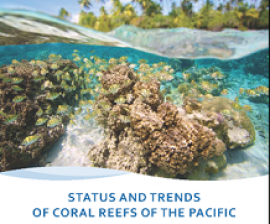
This report of 220 pages written by nearly 90 authors clearly presents the summation of an enormous amount of data and information on 19 of the 23 nations and states of the Pacific and outlines both the problems and stresses on these thousands of reefs, and the potential that these reefs will pro
The Secretariat of the Pacific Regional Environment Programme (SPREP) presents these guidelines for undertaking rapid biodiversity assessments in its Pacific island member countries and territories: Micronesia, Melanesia, and Polynesia. These assessments are referred to as BIORAPs.
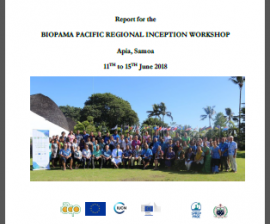
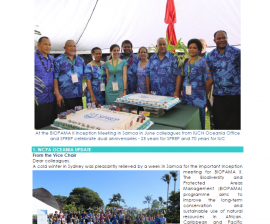
To formally launch the second phase of the Biodiversity and Protected Areas Management (BIOPAMA) programme, a regional inception workshop for the Pacific was held at the Tanoa Tusitala Hotel, Apia, Samoa from 11th to 15th June 2018.
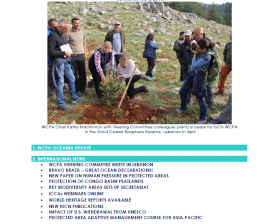
The Second Edition Of The Newsletter Of The IUCN World Commission On Protected Areas Oceania (2018). IUCN's World Commission on Protected Areas (WCPA) is the world's premier network of protected area expertise.
The third edition of the Newsletter of the IUCN World Commission on Protected Areas Oceania (2018). IUCN's World Commission on Protected Areas (WCPA) is the world's premier network of protected area expertise.
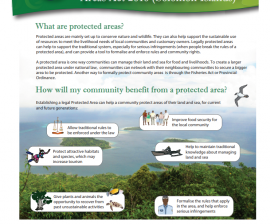
This is a simple guide on the Solomon Islands Protected Areas Act 2010 and how to establish terrestrial and marine protect areas through its provisions.
This report presents the Ecosystem-based Adaptation (EbA) Options Assessment and Masterplan for Honiara prepared as part of the Solomon Islands Ecosystems and Socio-economic Resilience Analysis and Mapping (ESRAM) to assess and prioritise climate change-related ecosystem-based adaptation options
Invasive species’ (often called pests, weeds and diseases) are plants, animals, disease agents and other organisms taken beyond their natural range by people, deliberately or unintentionally, and which become destructive to the environment or human livelihoods.