The Secretariat of the Pacific Regional Environment Programme (SPREP), in partnership with the United Nations Environment Programme (UN Environment) Global Programme of Action for the Protection of the Marine Environment from Land-based Activities (GPA), has prepared this Pacific Marine Litter Ac
This report updates the 1992 State of Environment report with the latest findings from the Marshall Islands. Environmental reporting is defined as a requirement for RMI in the ‘Office of Environmental Planning and Policy Coordination (OEPPC) Act 2003’.
A hopeful vision of the future is a world in which both people and nature thrive, but there is little evidence to support the feasibility of such a vision.
During the planning phase the efficacy of different strategies to manage marine resources should ultimately be assessed by their potential impact, or ability to make a difference to ecological and social outcomes.
In this article, I explore the knowledge and values that allowed the people of Oceania to develop sustainable use of their marine resources, followed by the demise of these systems after western colonization and the breakdown of traditional societies.
This study identifies the importance of: acquiring robust baseline data, being fully protected (no-take), using ecosystembased management, community inclusion, and of adopting an ecologically connected network approach.
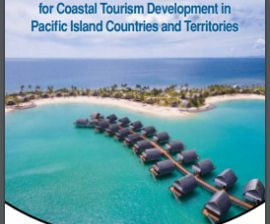
These Environmental Impact Assessment Guidelines for Coastal Tourism Development in Pacific Island Countries and Territories (Guidelines) represent a sector specific version of SPREP’s regional EIA Guidelines first published in 1993 and recently expanded and updated in 2016.
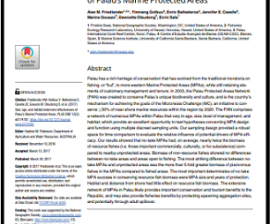
Palau has a rich heritage of conservation that has evolved from the traditional moratoria on fishing, or “bul”, to more western Marine Protected Areas (MPAs), while still retaining elements of customary management and tenure.