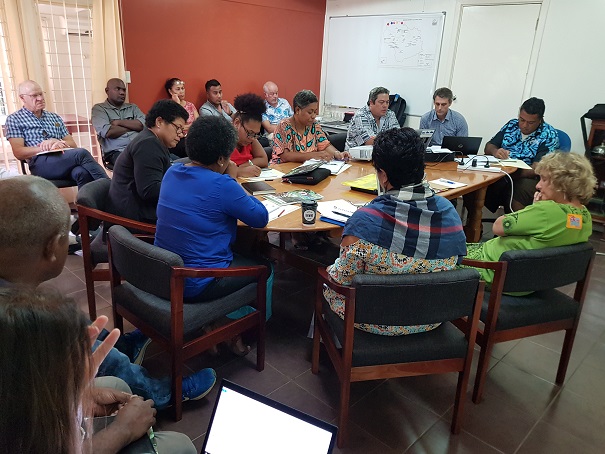
About
- Terms of Reference
- Action Plan 2014 – 2020
- PAWG Presentation at Annual Meeting, Suva, Fiji, July 2015
Members
- American Samoa Environmental Protection Agency
- Conservation International (CI)
- Coral Reef Advisory Group (CRAG) – American Samoan Government
- Deutsche Gesellschaft für Internationale Zusammenarbeit (GIZ)
- Marine Areas Network (FLMMA)
- Food and Agriculture Organization (FAO)
- International Union for Conservation of Nature - Oceania Regional Office (IUCN-ORO)
- Protected Areas Learning and Research Collaboration (PALRC)
- The Nature Conservancy (TNC)
- World Wide Fund (WWF)
- Wildlife Conservation Society – Fiji Country Programme
- Wildlife Conservation Society, Melanesia Program
Note - As of November 2022, the PAWG has been rebranded to the Pacific Area-based Conservation Network (PACoN), with a new terms of reference and membership. More information to come - WATCH THIS SPACE...
How Fiji’s Luxury Resorts Are Saving The Endangered Crested Iguana
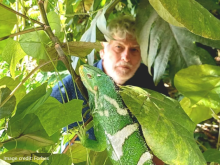
Deep in the dry tropical forest of Malolo Island, Peter Harlow freezes mid-step. The retired biologist from Sydney’s Taronga Zoo raises his flashlight to cut through the heavy Fijian darkness. To the untrained eye, the canopy is just a monochromatic tangle of leaves.
How intermediaries are reshaping mangrove restoration
Mangrove forests, located along tropical and subtropical coastlines, are increasingly recognized for their role in buffering climate disasters, storing carbon, supporting wildlife and livelihoods.
How is your MPA Doing?
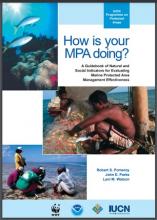
This guidebook offers managers and other conservation practitioners a process and methods to evaluate the effectiveness of Marine Protected Areas (MPAs) for the purposes of Adaptive Management.
How many bird and mammal extinctions has recent conservation action prevented?
Aichi Target 12 of the Convention on Biological Diversity (CBD) contains the aim to ‘prevent extinctions of known threatened species’.
How to ensure social outcomes in restoration
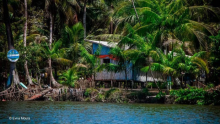
Effective restoration projects must generate meaningful benefits for both nature and people.
https://phys.org/news/2025-09-ocean-carbon-ailing-absorption-marine.html
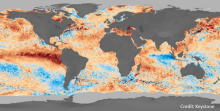
Measurements analyzed by an international research team led by ETH Zurich show that the global ocean absorbed significantly less CO₂ than anticipated during the unprecedented marine heat wave in 2023. The world's oceans act as an important sink for carbon dioxide (CO₂).
Identifying global marine climate refugia through a conservative approach to ocean biodiversity preservation
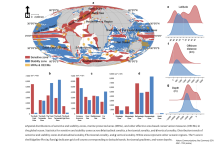
Global changes threaten marine species, making marine climate refugia essential for biodiversity conservation and climate change mitigation. Our analysis maps sensitive and stability zones across the global ocean.
Implementation costs of restoring global mangrove forests
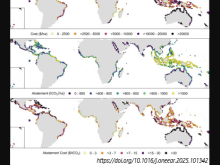
Mangroves provide numerous ecosystem services and are increasingly recognized as a natural climate solution. As a result, multiple recent initiatives have set ambitious mangrove restoration targets.
Improving biodiversity protection through artificial intelligence
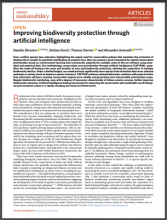
Over a million species face extinction, highlighting the urgent need for conservation policies that maximize the protection of biodiversity to sustain its manifold contributions to people’s lives.
Include biodiversity representation indicators in area-based conservation targets
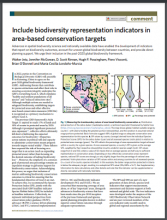
Advances in spatial biodiversity science and nationally available data have enabled the development of indicators that report on biodiversity outcomes, account for uneven global biodiversity between countries, and provide direct planning support.
Including Local EcologicalKnowledge (LEK) inMangrove Conservation& Restoration
Mangroves are trees and shrubs that grow in saline and brackish tidal waters across tropical and subtropical regions of the world.1Mangroves support rich biodiversity spanning both marine and terrestrial environments.
Indigenous knowledge, ancestral places: navigating change in UNESCO designated sites
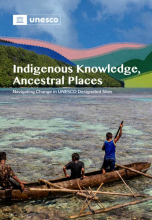
UNESCO’s new publication "Indigenous knowledge, ancestral places: navigating change in UNESCO designated sites" offers honest accounts of resilience from many different perspectives told by Indigenous Peoples whose territories intersect with UNESCO designated sites across t
Integrated Biodiversity Assessment Tool (IBAT) launches Species report with updated richer insights
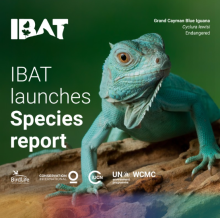
IBAT has released a new Species report designed to enhance biodiversity reporting and conservation planning.
Integrated Biodiversity Assessment Tool for Research and Conservation Planning (IBAT)
IBAT compares the current distribution of protected areas with the distribution of Key Biodiversity Areas, displaying the extent to which Aichi Target 11 (Convention on Biological Diversity) is being delivered strategically. By 2020, at least 17 per cent of terrestrial and inland water, and
Integrated Ecosystem Management Plan for Navua catchment and Beqa lagoon
Located in the Central Division of Fiji, the Navua River and Beqa lagoon support high social, ecological and economic values.
Integrated Management Effectiveness Tool (IMET) - Information Brochure
The Integrated Management Effectiveness Tool (IMET) is an approach to support protected areas planning, monitoring and evaluation and to improve management patterns and conservation outcomes.
Integrating behavioral movement and environmental preferences to map critical habitat of whale sharks using long-term satellite tracking in the Indo-Pacific Ocean
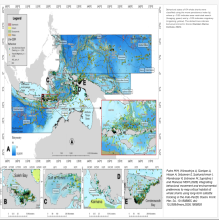
Understanding the spatial ecology of wide-ranging marine megafauna is essential for identifying critical habitats and designing effective conservation strategies.
Interim National Terrestrial Conservation Assessment for Papua New Guinea : Protecting Biodiversity in a changing Climate
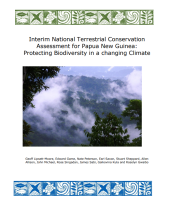
Papua New Guinea contains more than 7% of the world's biodiversity in less than 1% of the land area. PNG has more than 18,894 described plant species, 719 birds, 271 mammals, 227 reptiles, 266 amphibians and 341 freshwater fish species.
International trade regulations take a limited bite out of the shark fin trade
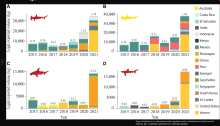
International trade is a major driver of shark overexploitation. In 2013, five threatened shark species were listed on Appendix II of the Convention on International Trade of Endangered Species to regulate global trade and promote recovery.
Island life in the 21st century : current status and challenges for mainstreaming the conservation and sustainable use of biodiversity in the Pacific Islands
This paper attempts to present a "quick snapshot" of the current status of biodiversity in the Pacific Islands and the prospects and challenges for the mainstreaming of its conservation and sustainable use by Pacific Island peoples during the 21st century.
IUCN RED LIST 60 years of success
Marking 60 years of The IUCN Red List of Threatened Species (IUCN Red List), this report captures its beginnings and tracks key milestones and achievements.
IUCN WCPA Technical Note - Equity in conservation – what, why and how?
Achieving the target to conserve 30% of land and sea requires strong emphasis on equity.
IUCN WCPA Technical Note - IMPROVING PROTECTED AND CONSERVED AREA MANAGEMENT TO SAFEGUARD ECOLOGICAL INTEGRITY AND MINIMISE ZOONOTIC DISEASE RISK
This Technical Note provides advice to managers of protected and conserved areas1 (PCAs) for applying a ‘One Health’ approach for the benefit of environmental, animal, and human health.
IUCN WCPA Technical Note 16: Approaches for identifying areas of particular importance for marine biodiversity
Identifying and conserving areas of particular importance for biodiversity is a fundamental element of the Kunming-Montreal Global Biodiversity Framework (GBF).
IUCN WCPA Technical Note No.25 - Enhancing climate change mitigation in protected areas: A practical guide for practitioners and decision-makers
Aim: To present a short, practical guide to integrate climate change mitigation (CCM) into Protected and Conserved Area (PCA) management and decision-making and as a companion to the WCPA technical report Enhancing climate change mitigation in protected areas.
IUCN World Heritage Outlook 3
IUCN World Heritage Outlook 3 builds on three cycles of Conservation Outlook Assessments undertaken since 2014. It presents the main results for 2020, but also some longer-term trends based on a comparison of three data sets now available.
Key Biodiversity Areas

Key Biodiversity Areas (KBAs) are the most important places in the world for species and their habitats. Faced with a global environmental crisis we need to focus our collective efforts on conserving the places that matter most.
Kipim Ol Sanbij Blong Vanuatu i sef Blong Ol Totel
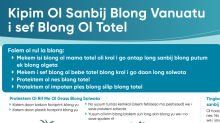
Folem ol rul ia blong:
Mekem isi blong ol mama totel oli krol i go antap long sanbij blong putum
ek blong olgeta
Mekem i sef blong ol bebe totel blong krol i go daon long solwota
Protektem ol nes blong totel
Kiribati National Marine Ecosystem Service Valuation
This study aimed to determine an economic value1 of seven marine and coastal ecosystem services in Kiribati.
Kiwa Initiative Capacity Needs Assessment for Implementing Nature-based Solutions for Climate Change Adaptation
This assessment identifies the capacity-building needs and priorities of local and national public authorities and institutions, representatives from civil societies and communities, and NGOs from the 19 Kiwa-eligible PICTs to: 1.
Kiwa Initiative launches a Pacific-wide campaign to strengthen understanding of Nature-based Solutions
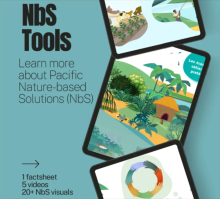
To celebrate its fifth anniversary, the Kiwa Initiative is launching a bilingual (French/English) awareness campaign aimed at strengthening understanding of Nature-based Solutions (NbS) among Pacific communities and practitioners.

Large marine protected areas can encompass movements of diverse megafauna
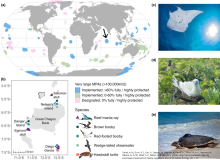
Global calls for greater ocean protection have sparked renewed interest in very large marine protected areas (VLMPAs, >100,000 km2) to achieve management targets; however, their conservation value is debated.
Launch of Takitumu Conservation Area as an OECM
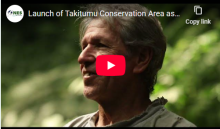
For Biodiversity Day 2024, the Cook Islands celebrated Ngai Taporoporo o Takitumu / Takitumu Conservation Area (TCA) as an Other Effective area-based Conservation Measure (OECM). This is the first OECM for the Cook Islands and for the Pacific.
Learning from Positive Deviance in Gender and Fisheries: A Case Study in Solomon Islands
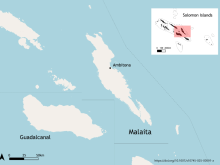
We present an initial exploration of why and how participation in a case of community-based resource management (CBRM) in a Pacific context could be considered a deviation from gender norms.
Lessons learnt in global biodiversity governance
INEA has featured many articles covering the dilemmas, puzzles, and tensions related to global biodiversity governance; this coverage was infrequent in earlier issues but has steadily increased as both environmental diplomacy and international law on biodiversity conservation and environmental ju
Litter accumulation in tropical mangroves threatens biodiversity and local communities
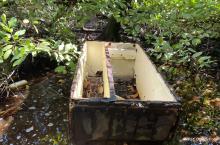
Mangroves, typical of tropical and subtropical latitudes, have become veritable natural traps for land- and sea-based waste.
Little-to-no industrial fishing occurs in fully and highly protected marine areas
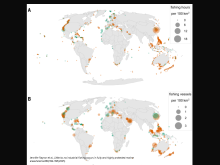
There is a widespread perception that illegal fishing is common in marine protected areas (MPAs) due to strong incentives for poaching and the high cost of monitoring and enforcement.
Machine learning prediction of connectivity, biodiversity and resilience in the Coral Triangle
Even optimistic climate scenarios predict catastrophic consequences for coral reef ecosystems by 2100. Understanding how reef connectivity, biodiversity and resilience are shaped by climate variability would improve chances to establish sustainable management practices.
Mainstreaming Biodiversity in Forestry
Forests are host to most of Earth’s terrestrial biodiversity. The conservation of the world’s biodiversity is thus utterly dependent on the way in which we interact with and use the world’s forests.
Mainstreaming biodiversity: A review of national strategies
Biodiversity is suffering dramatic declines across the globe, threatening the ability of ecosystems to provide the services on which humanity depends. Mainstreaming biodiversity into the plans, strategies and policies of different economic sectors is key to reversing these declines.
Making Money Local: Can Protected Areas Deliver Both Economic Benefits and Conservation Objectives?
This publication has been developed as a contribution to Phase II of the Two-phase Strategy on Protected Areas of the Secretariat of the Convention on Biological Diversity (CBD) and prepared pursuant to various paragraphs of COP decision XIII/2 on protected areas, in particular paragraph 5(a-e),
Making the global local Should the drive to 30x30 be locally led?
There has been a profound shift in attitudes towards the designation and management of site-based conservation over the past 25 years, from being a predominantly science-based, top-down and government-led approach to one that focuses on governance and equity, and is far more variable,
Making waves: The science and politics of ocean protection
Lubchenco, Jane, and Kirsten Grorud-Colvert. 2015. Making waves: The science and politics of ocean protection. Science Vol.
Malaysia's Timber Colony: Exposing Malaysia’s Grip Over Papua New Guinea’s Forests
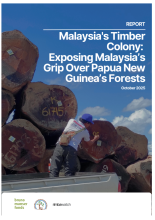
Papua New Guinea (PNG) is a major exporter of tropical logs worldwide. This report investigates the role of Malaysian companies and individuals in large-scale forest clearance in PNG through the misuse of Forest Clearing Authorities (FCAs).
Management of plan for the Ijuw/Anabar wetlands proposed conservation area (PCA) - Republic of Nauru
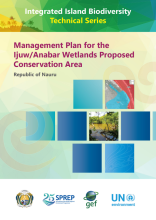
The management plan describes the priority strategies for the Ijuw/Anabar wetlands Proposed Conservation area (PCA) that will best maintain and improve the key conservation values in this area by reducing the impact of threats, including from climate change.
Management Plan for Upland Areas of Lake Lanoto'o National Park, 2018-2023
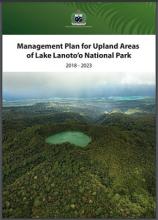
The management plan describes the priority strategies for the upland areas of the Lake Lanoto'o National Park that will nest maintain and improve the key conservation values in these areas by reducing the impact of threats including from climate change.
Management Plan for Upland Areas of Lake Lanuto'o National Park, Samoa
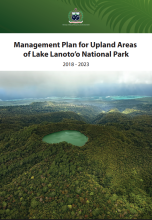
The management plan describes the priority strategies for the upland areas of the Lake Lanuto'o National Park that will best maintain and improve the key conservation values in these areas by reducing the impact of threats, including from climate change.
Mapping global freshwater ecosystems to guide national restoration targets and nature-based solutions
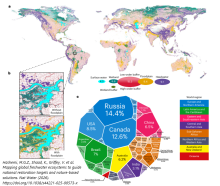
Freshwater ecosystems regulate the water cycle, support biodiversity and enhance resilience, yet they remain largely overlooked in global climate policies, and most national commitments lack clear, spatially defined targets for their protection and restoration.