
New Zealand's marine environment is under pressure from coastal development, shipping traffic and climate change, a new government report says.
New Zealand's marine environment is under pressure from coastal development, shipping traffic and climate change, a new government report says.

IUCN is seeking Expressions of Interest from suitably qualified firms and/or individuals to, use the Guidance Manual – Economic Valuation of Marine Ecosystem Services in the Pacific to prepare a detailed report quantifying the value of at least seven (7) marine and coastal ecosystem serv
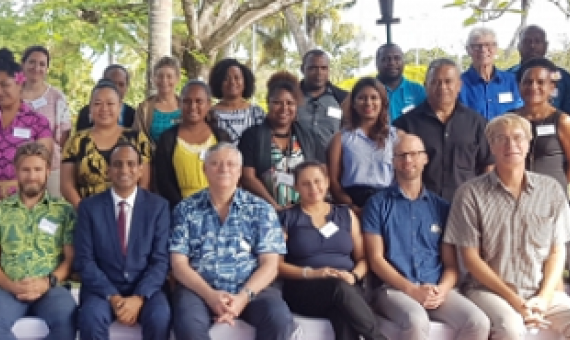
Representatives from five Pacific island countries have been in Nadi this week to begin the development of regional and national plans to implement the European Union (EU) funded Pacific-European Union Marine Partnership (PEUMP) programme Bycatch and Integrated Ecosystem Management (BIEM) compone
The ecology of many coral reefs has changed markedly over recent decades in response to various combinations of local and global stressors. These ecological changes have important implications for the abundance of taxa that regulate the production and erosion of skeletal carbonates, and thus for many of the geo‐ecological functions that coral reefs provide, including reef framework production and sediment generation, the maintenance of reef habitat complexity and reef growth potential.
Coral reefs underpin a range of ecosystem goods and services that contribute to the well‐being of millions of people. However, tropical coral reefs in the Anthropocene are likely to be functionally different from reefs in the past. In this perspective piece, we ask, what does the Anthropocene mean for the provision of ecosystem services from coral reefs? This synthesis of the coral reef ecosystem services literature suggests the field is poorly prepared to understand the changing service provision anticipated in the Anthropocene.
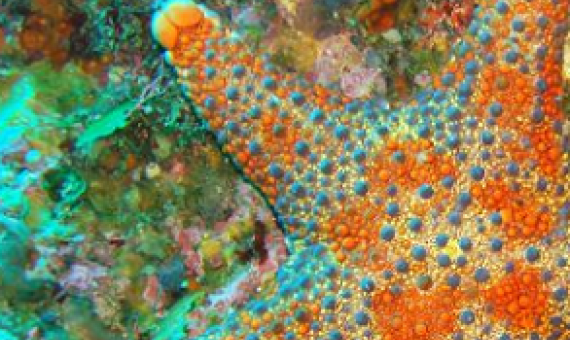
One of the foremost strategies for the recovery of marine ecosystems that has proven successful in other countries is the establishment of marine reserves.
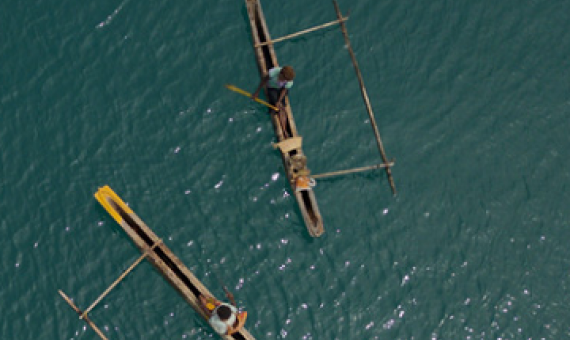
Marine resources play a vital role in food security for coastal communities across Papua New Guinea, which, after Australia, is the largest and most populated country in Oceania.
Long-term ecological monitoring of reef fish populations often requires the simultaneous collection of data on benthic habitats in order to account for the effects of these variables on fish assemblage structure. Here, we described an approach to benthic surveys that uses photogrammetric techniques to facilitate the extraction of quantitative metrics for characterization of benthic habitats from the resulting three-dimensional (3D) reconstruction of coral reefs.
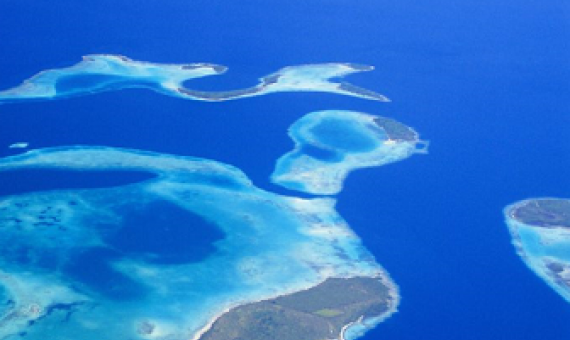
The Plan and Initiative aim to support the protection and restoration of marine ecosystems while promoting inclusive livelihoods, in line with SDG 14 (life below water). Click on the link below to read the full article.
Despite being notoriously destructive, bottom trawling is a popular fishing method, responsible for catching around 25% of all wild-caught seafood.