About
- Terms of Reference
- Action Plan 2014 – 2020
- PAWG Presentation at Annual Meeting, Suva, Fiji, July 2015
Members
- American Samoa Environmental Protection Agency
- Conservation International (CI)
- Coral Reef Advisory Group (CRAG) – American Samoan Government
- Deutsche Gesellschaft für Internationale Zusammenarbeit (GIZ)
- Marine Areas Network (FLMMA)
- Food and Agriculture Organization (FAO)
- International Union for Conservation of Nature - Oceania Regional Office (IUCN-ORO)
- Protected Areas Learning and Research Collaboration (PALRC)
- The Nature Conservancy (TNC)
- World Wide Fund (WWF)
- Wildlife Conservation Society – Fiji Country Programme
- Wildlife Conservation Society, Melanesia Program
Note - As of November 2022, the PAWG has been rebranded to the Pacific Area-based Conservation Network (PACoN), with a new terms of reference and membership. More information to come - WATCH THIS SPACE...
Mapping Multilateral Environmental Agreements to the Aichi Biodiversity Targets
Mapping Multilateral Environmental Agreements to the Aichi Biodiversity Targets
Technical report:
Mapping the patriarchy in conservation
It is essential to ensure the effectiveness of current conservation efforts to meet the interconnected crises of biodiversity loss, habitat degradation, and climate change.
Mapping the planet’s critical areas for biodiversity and nature’s contributions to people
Meeting global commitments to conservation, climate, and sustainable development requires consideration of synergies and tradeoffs among targets.
Marine Areas Beyond National Jurisdictions - What to do?

In June, 2015 the United Nations General Assembly approved a resolution calling for the development of an international legally-binding
Marine Atlas Maximising Benefits for Kiribati.
While the ocean covers more than two thirds of the Earth’s surface, the oceanic territory of Kiribati is morethan 4,000 times larger than its land territory. With an exclusive economic zone (EEZ) of 3.55 million km2,Kiribati is a large ocean state.
Marine Atlas, Maximising Benefits for Tonga
While the ocean covers more than two thirds of the Earth’s surface, the oceanic territory of Tonga is over 1,000 timeslarger than its land territory. With an exclusive economic zone (EEZ) of 700,000 km2, Tonga is a large ocean state.
Marine biodiversity law in Fiji, Solomon and Vanuatu Islands : final report
The research agreement signed on 19th December 2005 by the Institute of Research for Development (IRD), the University Paul Sabatier (Toulouse III) and Nantes University, the Pharmacochemical laboratories of Natural Substances and Pharmacophores Redox (UMR 1165) and the Centre of Maritime and Oce
Marine Bioregions of Fiji.
Marine spatial planning is underway now, or starting, in many Pacific Island countries, including Fiji.
Marine Bioregions of the Solomon Islands
Marine spatial planning is underway now, or starting, in many Pacific Island countries, including the Solomon Islands.
Marine Bioregions of Tonga
Marine spatial planning is underway now, or starting, in many Pacific Island countries, including Tonga.
Marine Bioregions of Vanuatu
In 2014, the Council of Ministers (Decision No. 172/2014) decided to start implementation of, amongst other things, a Marine Spatial Plan for the nation.
Marine Conservation Agreements - Guidance for the Tourism Industry in Fiji
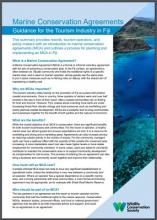
This summary provides resorts, tourism operators, and policy makers with an introduction to marine conservation agreements (MCA) and outlines a process for planning and implementing an MCA in Fiji.
Marine protected areas as living labs? Lessons learned & future perspectives
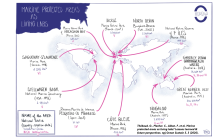
Marine Protected Areas (MPAs) management usually involves bringing multiple stakeholders together, to construct policy-relevant research programs and science-based tools for adaptive management.
Marine Protected Areas: Smart Investments in Ocean Health

Marine protected areas (MPAs) that effectively protect critical habitats, species and ecological functions are an essential tool for recovering, protecting and enhancing biodiversity, productivity and resilience, and for securing these benefits for current and future generations.
Marine protection targets: an updated assessment of global progress
Oonzaier, L. B. and D. Pauly. 2016. Marine protection targets: an updated assessment of global progress. Oryx 50(1), 27–35.
Marine spatial planning and ocean governance in Small Island Developing States
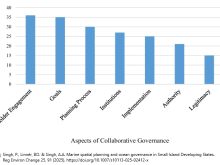
Marine spatial planning (MSP), initially developed to address the needs of the global North, is gaining significant traction in Small Island Developing States (SIDS) and is hailed as a collaborative governance instrument for managing and optimizing the allocation of ocean space.
Marine spatial planning in ocean governance: Fijian perspectives
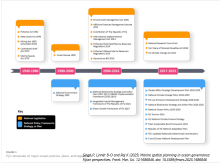
Marine Spatial Planning (MSP) is a globally established tool to support integrated ocean management.
Marine Spatial Planning, Pacific BioScapes Programme - Cook Islands
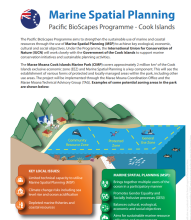
The Pacific BioScapes Programme aims to strengthen the sustainable use of marine and coastal resources through the use of Marine Spatial Planning (MSP) to achieve key ecological, economic, cultural and social objectives.
Marine Turtle Status report for Solomon Islands 2022
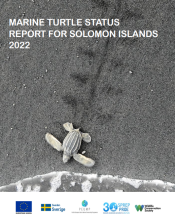
The marine turtle states review for Solomon Islands 2022 was commissioned to inform the development of the country's 5-year National plan of Action (NPOA) - Marine Turtles 2022-2026.
Marine-Related Learning Networks: Shifting the Paradigm Toward Collaborative Ocean Governance
Formal and semi-formal networks are emerging as effective, collaborative, and adaptable approaches for addressing complex, rapidly evolving ocean governance issues.
Marshall Islands' National Biodiversity Strategy and Action Plan

The purpose of this Biodiversity Strategy and Action Plan (BSAP) is to Assist the Marshall Islands to Plan for the Conservation of its biodiversity and for in the sustainable use of its biological resources.
Mismatches in Scale between highly Mobile Marine Megafauna and Marine Protected Areas
Marine protected areas (MPAs), particularly large MPAs, are increasing in number and size around the globe in part to facilitate the conservation of marine megafauna under the assumption that large-scale MPAs better align with vagile life histories; however, this alignment is not well established
Mobilizing Finance for Biodiversity: The Private Finance Sector and the Implementation of National Biodiversity Strategies and Action Plans (NBSAPs)
Nature is the foundation of life on Earth, underpinning the ecosystem services that sustain societies and economies. Yet, its degradation continues at an alarming rate, threatening planetary resilience and human well-being.
More than half the world’s forests fragmented in 20 years — but protection works: Study
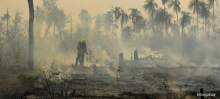
“If you can imagine walking into a huge, 1,000-kilometer square [386-square-mile] tropical forest … it’s moist and damp [with] rich soil and an overstory. You imagine walking into a 10-meter [33-foot] patch of forest and it’s just a totally different thing.
MPA Enforcement Toolkit
Marine protected areas (MPAs) are essential for conserving marine biodiversity, ensuring sustainable fisheries, and maintaining the health of ocean ecosystems.
National and Regional Networks of Marine Protected Areas: A Review of Progress
United National Environment Programme World Conservation Monitoring Centre. 2008. National and Regional Networks of Marine Protected Areas: A Review of Progress. Cambridge, U.K.
National and Regional Networks of marine protected areas: a review of progress
Most of the marine protected areas (MPAs) around the world, estimated to number about 5000, have been established both on an ad hoc basis and through systematic planning processes. The

National Marine Conservation Assessment for Papua New Guinea (Draft)
Papua New Guinea is committed to the establishment of a network of marine protected areas to fulfill national and international commitments.
National Protected Area Partnerships
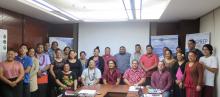
National-level evaluation of a community-based marine management initiative
Community-based approaches to conservation and natural resource management are considered essential to meeting global conservation targets.
Natural World Heritage in Oceania
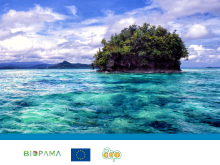
Natural and mixed World Heritage (WH) has generally not been a success in the Oceania region, due to limited support at all levels, unrealistic expectations about what WH can and cannot deliver, and a lack of resources to support all aspects of the WH process, particularly WH site management.
Nature-Related Finance and Indigenous Peoples
This briefing provides an overview of the interlinkages between the financial sector, nature and Indigenous Peoples.
Nauru Biological Rapid Assessment (BIORAP)
The findings of this BIORAP survey have identified or re-confirmed the critical importance of the biodiversity and ecosystems of Nauru's terrestrial and marine environments and the urgent need for follow-up activities to manage and mitigate threats for their conservation.
Navigator - a global database of verified marine protected and managed area regulations and boundaries
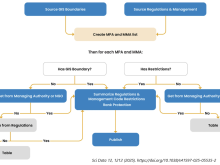
Comprehensive, global, and standardized data on ocean regulations are essential to assess protection levels. They are also key to successfully measuring progress towards 30 × 30 goals.
NBSAP Workshop Reports 2024 - 2025
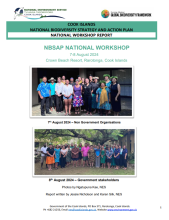
This dataset contains reports from several workshops held in the Cook Islands as part of the National Biodiversity Strategies and Action Plans (NBSAP) process.
New IUCN report identifies challenges and opportunities for Natural World Heritage in Oceania ahead of UNOC3
The Pacific region has witnessed some of humanity's greatest achievements. It is a vibrant tapestry of diverse cultures and languages and holds immense global significance for its biodiversity and geodiversity. Despite this, it remains very poorly represented on the UNESCO World Heritage List.
Nine changes needed to deliver a radical transformation in biodiversity measurement
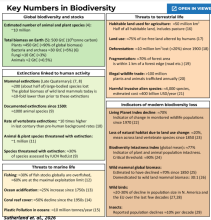
Biodiversity is declining in many parts of the world.
Novel Strategies for Coral Restoration
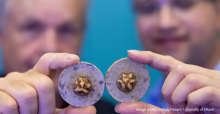
An interdisciplinary team at the University of Miami discovered a new way to help lab-grown baby corals survive through the often-difficult early life stage.
O Le Pupu Pu'e National Park (Ramsar Site) Management Plan 2020-2030
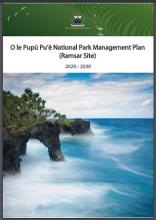
O Le Pupu-Pu'e National Park was the first Park established in Samoa at a time when the environment movement and concerns for our unique biodiversity and natural features was still only a passing thought.
Ocean justice? Marine genetic resources and monetary benefit-sharing under the BBNJ Agreement
he adoption of the BBNJ Agreement concluded a decades-long dispute over how MGRs of ABNJ should be legally classified and how benefits, particularly monetary benefits, derived from the utilisation and commercialisation of these MGRs, should be shared.
Ocean philanthropy: small sums for a vast domain
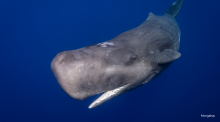
For a realm that covers most of the planet, the ocean attracts a modest share of charitable attention. In philanthropic terms, it remains a niche cause: widely discussed, but thinly financed. That gap has narrowed in recent years, though only slightly and from a low base.
Ocean Protection: Present Status and Future Possibilities
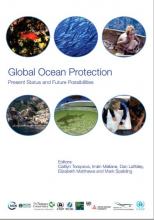
Toropova, C., Meliane, I., Laffoley, D., Matthews, E. and Spalding, M.
Ocean Travellers: Safeguarding Critical Habitats For Migratory Sharks And Rays
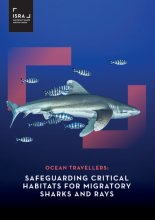
This report presents the first global overview of Important Shark and Ray Areas (ISRAs) for species listed under the Convention on the Conservation of Migratory Species of Wild Animals (CMS) and its daughter agreement, the Memorandum of Understanding for the Conservation of Migratory Sharks (Shar
Ocean travellers: Safeguarding Critical Habitats for Migratory Sharks and Rays
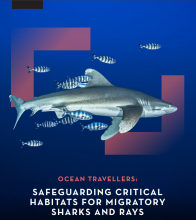
Sharks and rays are among the most threatened vertebrates on the planet, facing intense pressure from overfishing, habitat loss and degradation and inadequate protection across critical sites for life-history processes and their migratory ranges.
Oceanian Sovereignty: rethinking conservation in a sea of islands
In an age of dramatic environmental and ecological challenges, the dynamics of sovereignty associated with the conservation of natural resources in Oceania are in flux.
OECMs in Wetlands: Linkages with the Ramsar Convention
Drawing on the Kunming–Montreal Global Biodiversity Framework's Target 3 and the Ramsar Convention, this briefing note examines the synergies between Ramsar Site designations and OECM recognition, and what these mean for freshwater and coastal ecosystems.
Operationalizing nature recovery to market outcomes
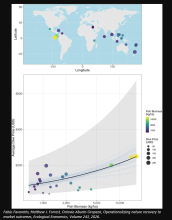
A prosperous blue economy in coastal areas requires operational models that clearly link ecological outcomes to economic returns. These models can support investment, planning, and the growth of non-extractive economies that benefit both coastal communities and the environment.
OTHER EFFECTIVE AREA-BASED CONSERVATION MEASURES
Area-based conservation has long been a cornerstone of efforts to conserve species and habitats, safeguard and enhance nature’s contributions to people, 1and improve the resilience of land and seascapes to climate change (Zeng et al. 2022; Brodie et al. 2023; Duncanson et al.
Other Effective Area-Based Conservation Measures: A Path Towards Equitable Biodiversity Conservation
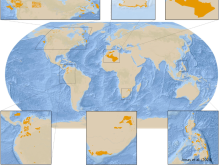
Many people are familiar with the idea of a protected area—land or water areas set aside and kept as natural as possible, such as national parks and nature reserves. Protected areas are one of the most well-established conservation tools, playing a crucial role in protecting biodiversity.