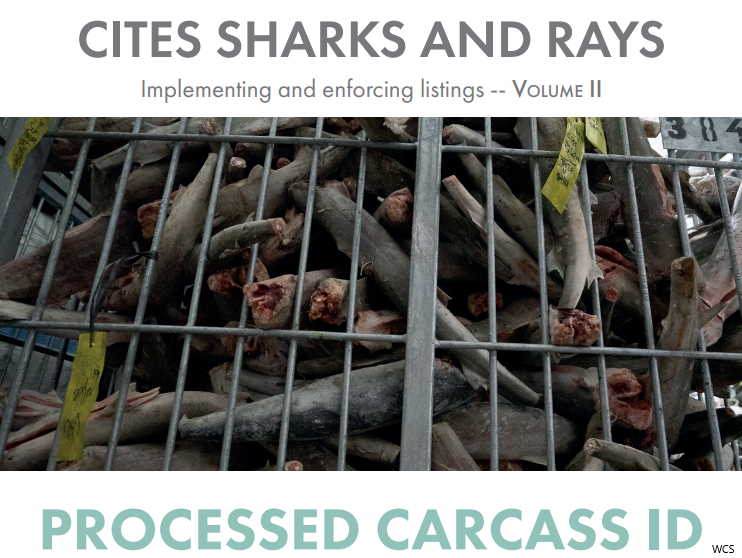
This guide forms part of a three-volume series of identification guides: Volume I – Full Carcass ID, Volume II – Processed Carcass ID [this guide], and Volume III – Dried Product ID. Each of these guides has been designed to follow a similar simple structure to guide users with no previous knowledge of sharks and rays with identification of different derivative products. This Processed Carcass ID guide was created to enable inspectors to visually identify a large number of shark and ray processed carcasses (trunks) found in trade in order to facilitate the monitoring of trade of those species listed in Appendix I and II of CITES. It has been designed to meet the need expressed by inspectors in Indonesia and other countries for an identification tool that is quick and easy to use when faced with the identification of processed carcasses.
Coastal wetland resilience through local, regional and global conservation
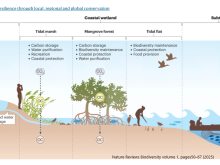
Coastal wetlands, including tidal marshes, mangrove forests and tidal flats, support the livelihoods of millions of people.
Collaborative Science Is Key to Conserving Highly Mobile Marine Species
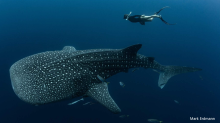
Research from Pew marine fellows is a critical resource for helping to protect large ocean species and can offer invaluable input as a network of high seas marine protected areas (MPAs) nears reality.
Common misconceptions of ‘other effective area-based conservation measures’ (OECMs) and implications for global conservation targets
The commitment to protect 30% of the Earth’s terrestrial, inland water, coastal and marine areas by 2030 under the Kunming-Montreal Global Biodiversity Framework has seen growing attention paid to ‘other effective area-based conservation measures’ (OECMs) to help achieve this target.
Community Biological Monitoring Training Video
Community Biological Monitoring Training Video. University of the South Pacific (USP) and the Fiji Locally Managed Marine Area Network (FLMMA). 2006. Suva, Fiji.
Community Synthesis Report - Ecosystem and Socio-economic Resilience Analysis and Mapping (ESRAM) Central Province, Solomon Islands
This publication is a simplified summary version of the report ‘Ecosystem and Socio-economic Resilience Analysis and Mapping (ESRAM) for Central Province, Solomon Islands’.
Community Synthesis Report - Ecosystem and Socio-economic Resilience Analysis and Mapping (ESRAM) Central Province, Solomon Islands
This publication is a simplified summary version of the report ‘Ecosystem and Socio-economic Resilience Analysis and Mapping (ESRAM) for Central Province, Solomon Islands’.
Community-based Biological Monitoring Training Guide (Applied at FLMMA Project Sites)

Tawake, A., Meo, S., Cakacaka, A. and Aalbersberg, W.G.L. 2004. Institute of Applied Sciences, USP
Community-Based Management
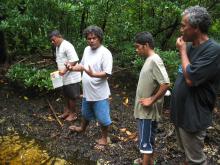
Community Based Management resources
Community-Based Management through Special Management Areas

Community Information Pamphlet; unkown date. Department of Fisheries, Tonga
Community-Based Marine Resource Management in Solomon Islands: A Facilitator’s Guide
WorldFish. 2013. CGIAR Research Program on Aquatic Agricultural Systems. Penang, Malaysia.
Comparing impacts and recovery of locally managed reefs after exposure to extreme waves from a category 5 cyclone
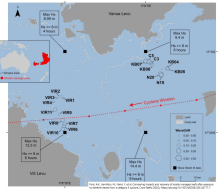
As the climate warms, coral reefs face more frequent and severe impacts from thermal stress while a greater proportion of tropical cyclones are expected to reach the strongest categories.
Comparison of historical (1980s) and contemporary (2023–2024) microplastic contamination of arc clams (Anadara spp.) from tidal flats in Suva, Fiji
Microplastic pollution threatens marine ecosystems, especially in vulnerable regions like the Pacific Islands. This study examines temporal trends by comparing Anadara spp. specimens from Fiji's tidal flats in the 1980s and 2023–2024.
Conservation and Commerce: Managing Small-Scale Fisheries for Ecological and Livelihood Benefits
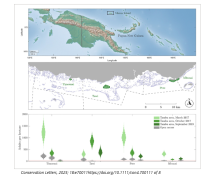
Delivering both social and ecological outcomes is regarded as essential for conservation actions to be effective, particularly in regions where Indigenous Peoples (IPs) and local communities (LCs) depend heavily on natural resources.

Conservation Finance for Coral Reefs
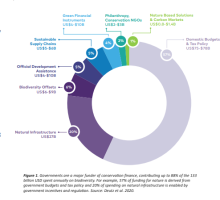
Coral reefs face threats from climate change and local pressures, but many initiatives designed to deliver conservation outcomes for them and the social-economic systems they support are limited by sustainable finance and the availability of funds over the long term.
Conservation Imperatives: securing the last unprotected terrestrial sites harboring irreplaceable biodiversity
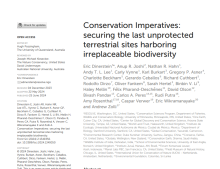
Ambitious biodiversity goals to protect 30% or more of the Earth’s surface by 2030 (30x30) require strategic near-term targets.
Conserving our sea of islands State of protected and conserved areas in Oceania
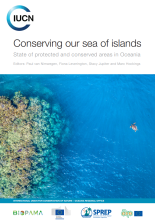
Conserving our sea of islands: State of protected and conserved areas in Oceania report is the first comprehensive regional assessment of protected and conserved areas.
Convention on Biological Diversity – Protected Areas Management Effectiveness

Convention on Biological Diversity – Protected Areas Management Effectiveness
Cook Islands State of Environment (SOE) report
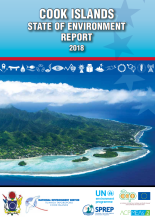
The 2018 SOE is a new baseline for future reports and can help the Cook Islands with national regional and international reporting obligations including multi-lateral environmental agreements.Available onlineCall Number: 333.7209623 COO, [EL]ISBN/ISSN: 978-982-04
Cook Islands GEF 7 Project Documents & Reports
Official project document for the Cook Islands national project under GEF-7 programming, project title: Enhancing Biodiversity considerations and effective protected area management to safeguard the Cook Islands integrated ecosystems and species. Annexes not in
Cook Islands GEF-7 Project ENUA Documents & Reports

This project aims to reduce and mitigate negative environmental impacts of the key development sectors (agriculture, infrastructure, tourism), which were recognized in the 2018 State of Environment Report as the main national drivers of biodiversity and habitat degradation.The Cook Islands GEF-7
Coral Health and Disease in the Pacific: Vision for Action
Galloway, S.B., Bruckner, A.W. and Woodley, C.M. (eds.). Coral Health and Disease in the Pacific: Vision for Action. 2009. NOAA Technical Memorandum NOS NCCOS 97 and CRCP 7.
Coral microbiomes as reservoirs of unknown genomic and biosynthetic diversity
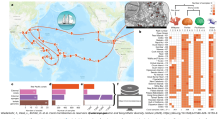
Coral reefs are marine biodiversity hotspots that provide a wide range of ecosystem services1.
Coral microbiomes as reservoirs of unknown genomic and biosynthetic diversity
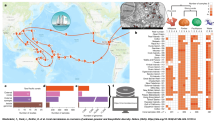
Coral reefs are marine biodiversity hotspots that provide a wide range of ecosystem services1.
Coral reefs at a crossroads
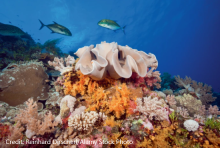
The importance of coral reefs cannot be overstated.
Could a crack-down on China's shark conservation save a species?
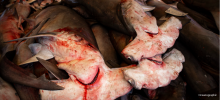
Stronger shark conservation policies across China could – in effect – save the species from extinction, is the argument being levelled at the United States via a petition asking the US to better hold China accountable for failing to meet basic conservation standards.
COVID-19 and protected areas: Impacts, conflicts, and possible management solutions
During the first wave of the COVID-19 pandemic, management authorities of numerous Protected Areas (PAs) had to discourage visitors from accessing them in order to reduce the virus transmission rate and protect local communities.
COVID-ERA POLICIES AND ECONOMIC RECOVERY PLANS: ARE GOVERNMENTS BUILDING BACK BETTER FOR PROTECTED AND CONSERVED AREAS?
The COVID-19 pandemic is having a major impact on conservation policies and practice at multiple scales, including protected and conserved areas (PCAs). There is a need to understand the implications for PCAs of recent actions, enacted or promoted in the wake of COVID-19.
Creating a National Coral-Focused Climate Change Adaptation Plan for Fiji to Prevent Coral Species Extinction in the Face of Rapid Climate Change: Applying the UNESCO-Endorsed “Reefs of Hope” Ocean Decade Action
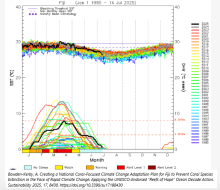
In the face of recent setbacks to coral reef conservation and restoration due to intensifying marine heat waves, new coral-focused strategies have been developed to accelerate natural processes of coral reef adaptation and recovery.
Cultural ecosystem services and the conservation challenges for an Indigenous people's aquatic protected area practice.
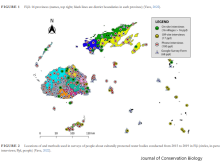
Globally, protected areas associated with sacred sites and cemeteries are an emerging area of research. However, they are biased toward terrestrial systems.
Current Recorded Cook Islands Terrestrial Protected Areas. (NES 2011)
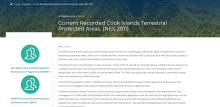
The SOE uses the 2011 report by Cook Islands to the Convention on Biological Diversity (CBD) to identify the country’s terrestrial protected areas.
Current trends and future directions for integrating social values into mangrove restoration
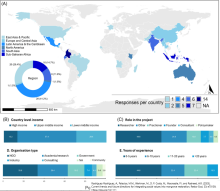
Despite the recent rise in mangrove restoration projects, the extent to which many projects include social dimensions remains contested, with limited research informing insights from on-ground projects.
Database of Global Data Sources for Biodiversity Conservation Monitoring
Here you can access a database created by the Group in collaboration with Re:wild as part of an inventory of available data sources.
Decent Work in Nature-Based Solutions 2024: Unlocking jobs through investment in skills and nature-based infrastructure
This report – the second in a series of International Labour Organization (ILO)–United Nations Environment Programme (UNEP)–International Union for the Conservation of Nature (IUCN) publications on decent work in nature-based solutions (NbS) – aims to improve the understanding of the role of NbS
Defining ‘science-based targets’
Setting targets for addressing major planetary concerns is an essential prerequisite for concerted global action (both inside and outside multilateral environmental agreements) and is necessarily a societal and political process, requiring negotiation and convergence among oftenconflicting intere
Delimiting Surveys for Invasive Ants
Pacific Invasives Network. Delimiting Surveys for Invasive Ants. 2013. Auckland, New Zealand.
Designing and managing protected and conserved areas to support inland water ecosystems and biodiversity
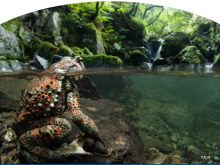
Inland waters – such as rivers, lakes and other wetlands – are among the most biodiverse ecosystems on the planet. They are also the most threatened; almost one in three species is at risk of extinction and monitored populations of freshwater species have declined by 85% since 1970.
Designing gender-inclusive data systems in small-scale fisheries
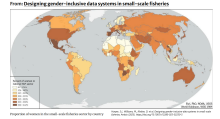
Gender equality is a ubiquitous national goal, yet sectoral gender data gaps to support this goal persist.
Devastation of island biodiversity: a land snail perspective
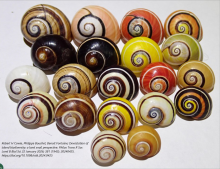
Many islands are remote and the level of interest in land snails as a component of the global biodiversity conservation agenda is low. The conservation status of many island land snail faunas thus remains at best out of date.
Documenting biodiversity outcomes in marine fisheries management
This guidance suggests actionable ways fisheries managers can utilize the types of survey and monitoring data generally being collected in priority areas (i.e.
Don’t just plant trees, plant forests to restore biodiversity for the future
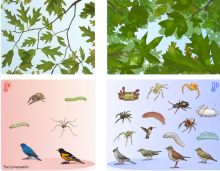
Around the world, people plan to plant more than 1 trillion trees this decade in an ambitious effort to slow climate change and reduce biodiversity loss. But if the past is prologue, many of those planted trees won’t survive.
Downlisting and recovery of species assessed by the IUCN
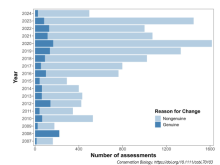
Despite the increasing number of species assessed for extinction risk by the International Union for Conservation of Nature (IUCN) (163,040 species as of 2024), only about 1 in 1,000 have been downlisted due to genuine population improvement.
Draft for Discussion : Issues for consideration in the development of a Marine Protected Area Policy for Papua New Guinea
Papua New Guinea is a Member of the Coral Triangle Initiative on Coral reefs, Fisheries and Food Security (CTI-CFF), and in order to support the marine biodiversity goals of the CTI Regional and National Plans of Action, one action they have prioritised, is the need to strengthen marine governanc
Draft Marine Bioregions of the Southwest Pacific
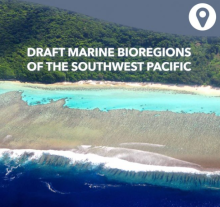
Marine spatial planning is underway now, or starting, in many Pacific Island countries.
Drone imaging can accurately assess coral cover, bleaching, and growth form for shallow coral reefs
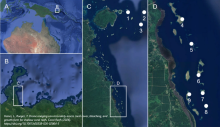
Assessing the impacts of rapid environmental change on coral reefs is hindered by a discrepancy between the regions with the greatest need and those that receive the most research funding.
ECOLOGICAL AND SOCIOECONOMIC VULNERABILITY AND OPPORTUNITIES ASSESSMENT (ESVOA) SOUTH WEST BAY, MALEKULA
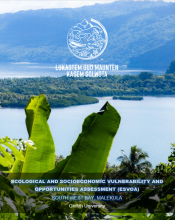
The objective of an Ecosystem and Socio-economic Resilience Analysis and Mapping (ESRAM) process is to generate a robust planning baseline to inform the identification of ecosystem-based adaptation (EbA) options for strengthening the socio-ecological resilience of communities to the impacts of cl
Ecological and Socioeconomic Vulnerability and Opportunities Assessment (ESVOA), North Pentecost
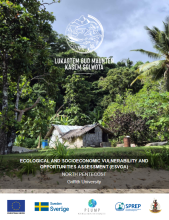
The objective of an Ecosystem and Socio-economic Resilience Analysis and Mapping (ESRAM) process is to generate a robust planning baseline to inform the identification of ecosystem-based adaptation (EbA) options for strengthening the socio-ecological resilience of communities to the impacts of cl
Ecological and Socioeconomic Vulnerability and Opportunities Assessment (ESVOA), Tenmaru, Malekula
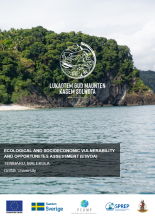
he objective of an Ecosystem and Socio-economic Resilience Analysis and Mapping (ESRAM) process is to generate a robust planning baseline to inform the identification of ecosystem-based adaptation (EbA) options for strengthening the socio-ecological resilience of communities to the impacts of cli
Ecological and Socioeconomic Vulnerability and Opportunities Assessment (ESVOA), Wiawi, Malekula.
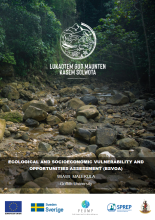
The objective of an Integrated Ecosystem Management Plan process is to generate a robust planning baseline to inform the identification of ecosystem-based adaptation (EbA) options for strengthening the socio-ecological resilience of communities to the impacts of climate change and other direct an
Ecological Constraints on Tropical Forest Recovery Challenge the “Long-Term” Vision of the Kunming–Montreal Global Biodiversity Framework
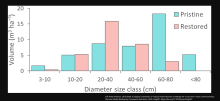
The Kunming–Montreal Global Biodiversity Framework (GBF) outlines targets for protecting and restoring biodiversity by 2030, with the vision of “living in harmony with nature” by 2050.