IUCN is pleased to invite you to an online training course on the Red List of Ecosystems methodology and its possible applications.
IUCN is pleased to invite you to an online training course on the Red List of Ecosystems methodology and its possible applications.
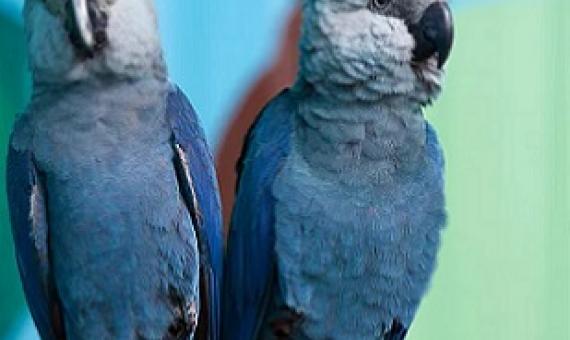
Humans are dismantling and disrupting natural ecosystems around the globe and changing Earth’s climate. Over the past 50 years, actions like farming, logging, hunting, development and global commerce have caused record losses of species on land and at sea.
Regime shifts can abruptly affect hydrological, climatic and terrestrial systems, leading to degraded ecosystems and impoverished societies. While the frequency of regime shifts is predicted to increase, the fundamental relationships between the spatial-temporal scales of shifts and their underlying mechanisms are poorly understood. Here we analyse empirical data from terrestrial (n = 4), marine (n = 25) and freshwater (n = 13) environments and show positive sub-linear empirical relationships between the size and shift duration of systems.
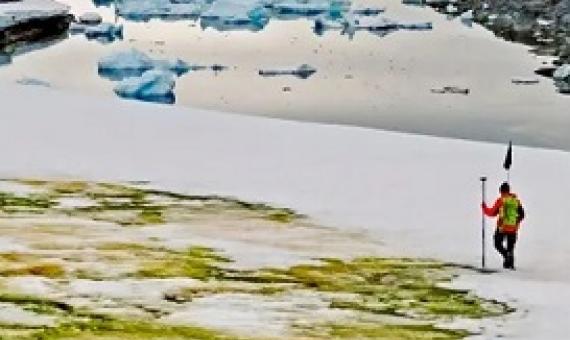
Researchers map ‘beginning of new ecosystem’ as algae bloom across surface of melting snow...Scientists have created the first large-scale map of microscopic algae on the Antarctic peninsula as they bloom across the surface of the melting snow, tinting the surface green and potentially creating a
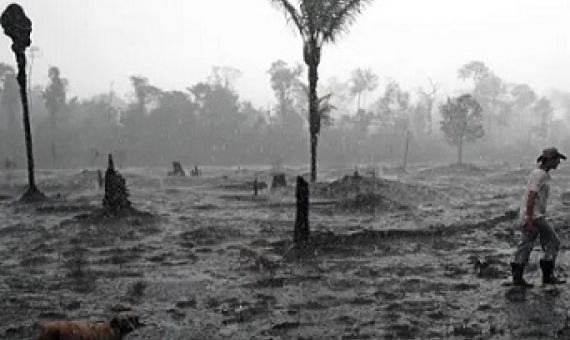
Even large ecosystems the size of the Amazon rainforest can collapse in a few decades, according to a study that shows bigger biomes break up relatively faster than small ones.
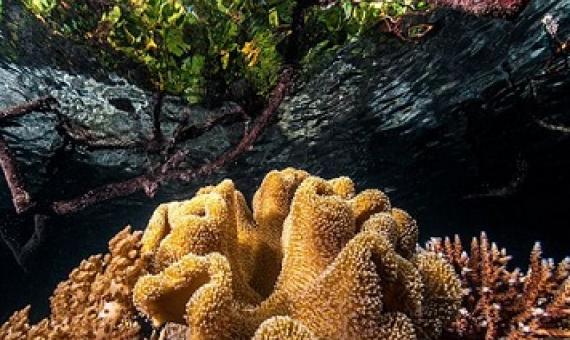
Next week, representatives of more than 190 nations are gathering in Rome to discuss how to halt the biodiversity crisis during this decade and beyond.
Guidelines, brochures, Indicators and published work on the Cartagena Protocol on Biosafety to the Convention on Biological Diversity which is an international treaty governing the movements of living modified organisms (LMOs) resulting from modern biotechnology from one country to another.
The findings of this BIORAP survey have identified or re-confirmed the critical importance of the biodiversity and ecosystems of Nauru's terrestrial and marine environments and the urgent need for follow-up activities to manage and mitigate threats for their conservation.
MACBIO is a project that supports sustainable economies and livelihoods of Pacific Island Countries by strengthening institutional and individual capacity, to manage and conserve biodiversity in marine and coastal ecosystems. The project was commissioned by BMUB to GIZ as part of IKI, jointly implemented by SPREP, IUCN and GIZ from 2013 to 2018.
This dataset holds all MACBIO-related resources pertaining to Tonga as one of the participating countries.

The world’s people face “untold suffering due to the climate crisis” unless there are major transformations to global society, according to a stark warning from more than 11,000 scientists. “We declare clearly and unequivocally that planet Earth is facing a climate emergency,” it states.