



by Sprep-Admin

Since 1974, the world has celebrated World Environment Day every year on 5 June, engaging and encouraging governments, businesses, and citizens of the world to focus their efforts on a pressing environmental issue. This year, the focus shifts to biodiversity, and in the midst of this global

by Sprep-Admin

On 2 June 2020 the BIOPAMA Action Component launched the call for proposals for Rapid Response Grants.

by Sprep-Admin

A new report from the Khaled bin Sultan Living Oceans Foundation (KSLOF) provides a promising assessment of the status of coral reefs in New Caledonia.

by Sprep-Admin

Tropical forests can develop resistance to a warmer climate, but 71 percent will come under threat in the next decade if global average temperatures reach two degrees Celsius above pre-industrial levels, a new study warns.

by Sprep-Admin

Upon first glance, the crown-of-thorns starfish looks a lot like an enemy creature you'd find in a nature-based video game. Long spikes cover its body, which can reach 2 1/2 feet in diameter. It's somewhat reminiscent of a land mine, if a land mine had 14 to 21 movable arms.

by Sprep-Admin

Researchers at the University of Southampton have shown that an extinction event 360 million years ago, that killed much of the Earth's plant and freshwater aquatic life, was caused by a brief breakdown of the ozone layer that shields the Earth from damaging ultraviolet (UV) radiation.

by Sprep-Admin

A team of University of Rhode Island scientists and statisticians conducted a sophisticated quantitative analysis of a mass extinction that occurred 215 million years ago and found that the cause of the extinction was not an asteroid or climate change, as had previously been believed.

by Sprep-Admin

Next week the Department of Environmental Protection and Conservation (DEPC) will be celebrating the Vanuatu National Environment Week (VNEW) in Port Vila to coincide with World Environment Day (WED) which falls on June 5th every year.

by Sprep-Admin

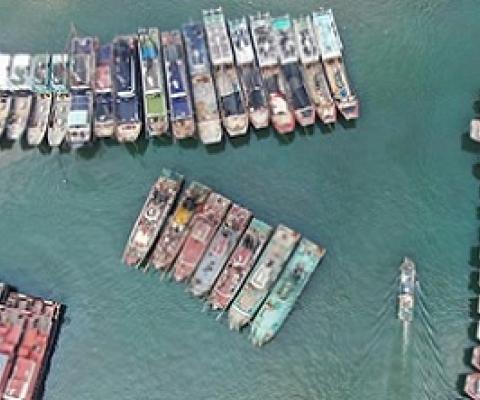
Managers of the American fisheries operating in the Pacific Ocean have asked President Donald Trump to open four national marine monuments to commercial fishing—a request that could inhibit protections in areas set aside, in part, for dwindling fish populations to renew themselves.

by Sprep-Admin

The tendency to place protected areas in habitats that are less attractive to humans because they are not very productive may be the reason why many species remain threatened and continue to decline.

More News & Sources of Information

The following are excellent sources for the latest news, literature, webinars, videos and audio on marine protected areas, marine pollution, marine management, ocean and marine planning, ecosystem-based management, grants, jobs, and much more.  Click each icon to learn more and to subscribe.

Image

octo group


Image
marine ecosystems and management