


by Sprep-Admin

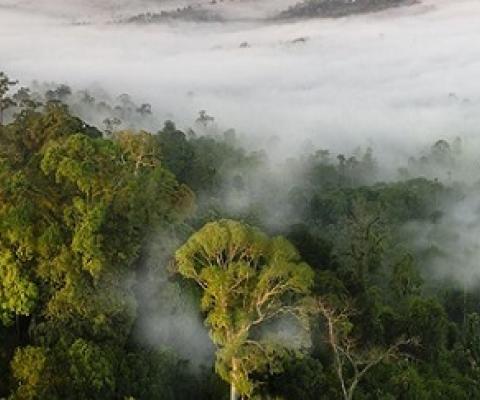
A new University of British Columbia study offers new evidence that protected areas are effective at conserving wildlife. Researchers at UBC's faculty of forestry analyzed data from a global data set drawing from 8,671 camera trap stations spanning four continents.

by Sprep-Admin

A team from the Vanuatu Klaemet Infomesen blong Redy, Adapt mo Protekt (Van– KIRAP) have conducted traditional knowledge (TK) surveys on agriculture recently on the islands of Epi, Santo and Vanua Lava.

by Sprep-Admin

To ensure food security, the world must stop letting fertile soil wash and blow away. Soil creates life from death. The production of more than 95% of the food we eat relies on soil...Yet this precious resource is eroding at a global average of 13.5 tonnes per hectare per year.

by Sprep-Admin

When Malaysian logger Richard Kong Sing Ngea pleaded guilty in December 2020 to the illegal harvesting of Tubi trees in Solomons’ Isabel Province, tribal leader Wilson Tohidi was thrilled.

by Sprep-Admin

Scientists from Macquarie University in Sydney, Australia have authored a new paper that shows that terrestrial protected areas (PAs) around the world are hit by two major threats: climate change and land-use change.

by Sprep-Admin

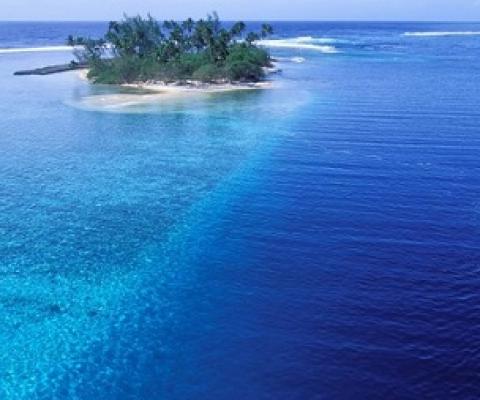
Marine explorers have discovered a "pristine" 3km (2-mile) coral reef at depths of 30m (100ft) off the coast of Tahiti, French Polynesia. It is one of the largest discovered at that depth, says the United Nations Educational, Scientific and Cultural Organization, which led the mission.

by Sprep-Admin

In many places, Indigenous communities are working to restore seaweed species that have been traditional food sources or supported traditional diets. From kelp farms in Alaska to seaweed-focused community education in Hawai‘i, the projects take many forms.

by Sprep-Admin

The Maldivian President Ibrahim Mohamed Solih and his administration designated six naturally unique and eco-rich areas in Laamu Atoll as Marine Protected Areas (MPAs).

by Sprep-Admin

Marine protected areas (MPAs) are areas of seas, oceans or estuaries that are managed and regulated for a number of different purposes. Usually, for biodiversity conservation, as they limit or disallow fishing and aquaculture activities within the boundaries of the MPA.

by Sprep-Admin

The history of life on Earth has been marked five times by events of mass biodiversity extinction caused by extreme natural phenomena. Today, many experts warn that a Sixth Mass Extinction crisis is underway, this time entirely caused by human activities.

More News & Sources of Information

The following are excellent sources for the latest news, literature, webinars, videos and audio on marine protected areas, marine pollution, marine management, ocean and marine planning, ecosystem-based management, grants, jobs, and much more.  Click each icon to learn more and to subscribe.

Image

octo group


Image
marine ecosystems and management