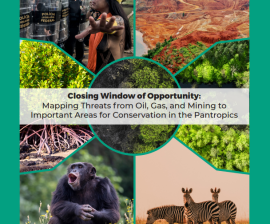
The global race to safeguard irreplaceable ecosystems is nearing a critical threshold, and the window to protect vital areas for climate stability, biodiversity, and human wellbeing is rapidly closing.
Identifying and conserving areas of particular importance for biodiversity is a fundamental element of the Kunming-Montreal Global Biodiversity Framework (GBF).
The Convention on Biological Diversity Kunming-Montreal Global Biodiversity Framework requires signatories to ensure that all areas within a country are under Participatory, Integrated, and Biodiversity-Inclusive Spatial Planning (referred to here as PI-BISP) to bring the loss of areas of high bi
As world leaders and scientific institutions from across the globe gather to discuss the biodiversity crisis at COP16 and climate change at COP29 this fall, it’s critical that they do not neglect the important work that is already being done by one of the world’s key stewards of nature – botanica
We describe below the data and provide an overview of the specific variables that are constructed for the analysis in the papers: “Revisiting Global Biodiversity: A Spatial Analysis of Species Occurrence Data from the Global Biodiversity Information Facility” by Susmita Dasgupta, Brian
There has been a profound shift in attitudes towards the designation and management of site-based conservation over the past 25 years, from being a predominantly science-based, top-down and government-led approach to one that focuses on governance and equity, and is far more variable,
Species do not exist in isolation; they are interconnected. A key element to addressing environmental problems, such as improving water quality and renewing biodiversity, involves addressing nature conservation at its core.
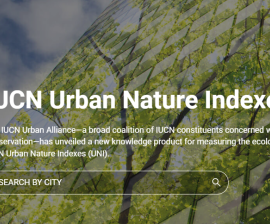
The UNI can be subdivided into six themes: consumption drivers, human pressures, habitat status, species status, nature’s contributions to people, and governance responses. Each theme contains five indicator topics amounting to 30 in total.
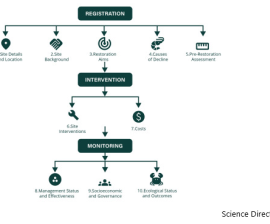
Restoration is a key component of global and national efforts to combat ecosystem degradation, reduce biodiversity loss, and adapt to climate change, and there is currently an impetus to scale up restoration efforts.