Fiji and other Pacific Island Countries face a high risk of communicable disease outbreaks caused by endemic, emerging and re-emerging disease, which are influenced by social, economic and ecological changes.
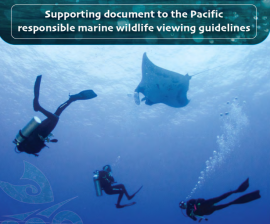
This guideline provides practical, science-based information for tourism operators and tourism regulators who want to offer the best possible experience to their customers, while conserving species and habitats and making a positive contribution to local communities.
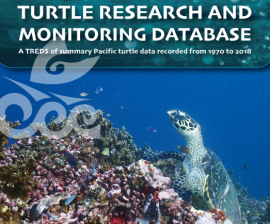
The Turtle Research and monitoring Database System (TREDS) was developed in 1993, to allow members of the Secretariat of the Pacific Regional Environment Programme (SPREP) to store, collate, and organise their data for research, monitoring and reporting.
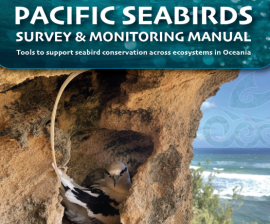
The goal of this manual is to encourage and support seabird conservation and research across the region, particularly in areas where this work is just starting out.
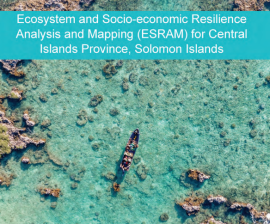
The target area for the ESRAM assessment is the land- and seascape comprising Nggela Islands, Russell Islands and Savo Island. This is largely due to the very high biodiversity values of their terrestrial and marine areas.
The Pacific Ocean is the largest geographic feature of planet Earth. The Pacific region is home to more than 38 million people1 who rely on it for economic, social and cultural wellbeing, and it is critically important to the global ecosystem.
This publication is a simplified summary version of the report ‘Ecosystem and Socio-economic Resilience Analysis and Mapping (ESRAM) for Central Province, Solomon Islands’.