Identifying hotspots of biological diversity is a key step in conservation prioritisation. Melanesia—centred on the vast island of New Guinea—is increasingly recognised for its exceptionally species-rich and endemic biota.
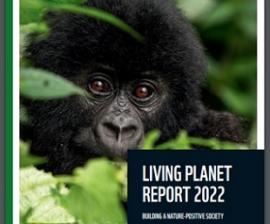
This edition of the Living Planet Report confirms the planet is in the midst of a biodiversity and climate crisis, and that we have a last chance to act. This goes beyond conservation.
Marine protected areas (MPAs) are ubiquitous in global ocean conservation and play a pivotal role in achieving local, national, and regional area-based conservation targets.
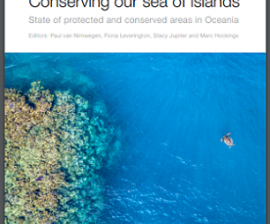
Conserving our sea of islands: State of protected and conserved areas in Oceania is a landmark publication, bringing together regional and international experts to prepare the first comprehensive review of the status and issues for protected and conserved areas in the region.
This KBA (Key Biodiversity Areas – areas of high biodiversity and conservation value) report outlines key recommendations for the Government of Kiribati and its people for protecting its unique biodiversity and supporting sustainable livelihoods.
Forests are host to most of Earth’s terrestrial biodiversity. The conservation of the world’s biodiversity is thus utterly dependent on the way in which we interact with and use the world’s forests.
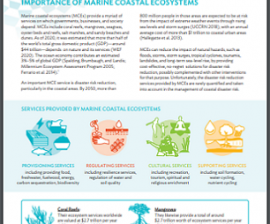
Marine coastal ecosystems (MCEs) provide a myriad of services on which governments, businesses, and society depend. MCEs include coral reefs, mangroves, seagrass, oyster beds and reefs, salt marshes, and sandy beaches and dunes.
Recognizing two decades of failure to achieve global goals and targets, parties to the Convention on Biological Diversity are in the final phase of negotiating a Post- 2020 Global Biodiversity Framework for the conservation, sustainable use and benefit sharing of biodiversity.
Healthy mangrove ecosystems are critical for global climate action – playing a key role in carbon storage and in building resilience to a rapidly warming world.
Other effective area-based conservation measures (OECMs) represent unique opportunities to help achieve the 2030 biodiversity conservation agenda. However, potential misuse by governments and economic sectors could compromise the outcome of these conservation efforts.