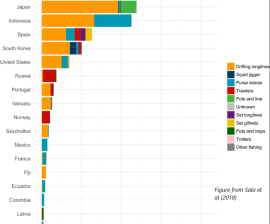
On paper, the sea is increasingly protected. Governments have designated vast marine protected areas (MPAs) and pledged to conserve 30% of the ocean by 2030. Maps shaded in reassuring blues now circulate widely. Yet the reality offshore often looks much the same as before.
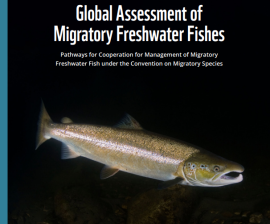
This report provides the most comprehensive global assessment to date of migratory freshwater fishes, documenting the scale, urgency, and opportunity for coordinated international action under the Convention on the Conservation of Migratory Species of Wild Animals (CMS).
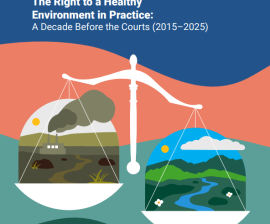
Since its initial articulation in the early 1970s, the sphere of legislative and judicial practices regarding the right to a healthy environment (R2HE) has evolved substantially.
In public finance, some costs are politely kept off the books. The ocean has long been one of them. Governments often speak of “blue growth” and “sustainable use,” yet many policies still treat marine ecosystems as a kind of free input: available, resilient, and cheap to replace.
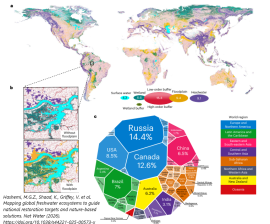
Freshwater ecosystems regulate the water cycle, support biodiversity and enhance resilience, yet they remain largely overlooked in global climate policies, and most national commitments lack clear, spatially defined targets for their protection and restoration.
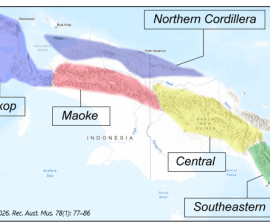
A review of the geology, palaeontology, genetic, and morphology studies indicates that during the mid-Miocene to Pliocene, New Guinea consisted of four island Blocks (Vogelkop, Maokop, Central, and Southeastern). The initial dispersal of marsupials from Australia was into the Vogelkop Block.
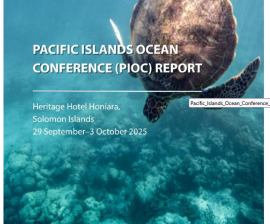
The core objective of the conference was to provide a cross-disciplinary space that fosters new knowledge, inspires learning, and strengthens the science–policy interface.
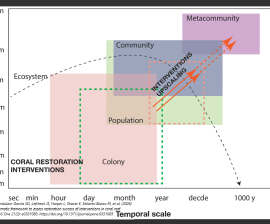
An ecosystem is defined as a collection of organisms that move energy within and outside of a system, while sustaining both the system itself and the multiple services that benefit humanity.