The Environment Investigation Agency, WWF Pacific, Centre for International Environmental Law and Massey University will bring together panelists to discuss key gaps in current frameworks governing plastics and highlight the role Pacific islands states play as champions for a global Convention to
Opening session of the 10th Pacific Islands Conference Nature Conservation and Protected Areas with welcome words from the conference organisers (New Caledonia, PIRT and SPREP) and a keynote speech presenting the State of Environment and Conservation in the Pacific Islands in the year 2020.
This document is a management plan for the conservation of the natural resources and biodiversity of the Malololelei Community Conservation Area (CA) for the period 2024-2025 (10 years).
The Magiagi leaders, Pulega a Alii ma faipule wishes to dedicate a part of their land to establish a Rainforest Conservation Area (RCA). Their vision is for the protection and preservation of their natural and cultural resources to benefit current and future generations.
The Lalomanu leaders, Pulega a Alii ma faipule, and Afioga Fuataga Iakopo Faasii Faatiga II, wish to dedicate a part of their land to establish the Lua o Fafine Conservation Area.
The first edition of the State of Finance for Forests (SFF) report provides an overview of global public and private financial flows to forests in 2023, comparing these finance flows to the investment needed to unlock forests' potential to address climate change, biodiversity loss and land degrad
Title 27 of the Palau National Code as amended by the Act (SIXTH OLBIIL ERA KELULAU) to Amend Chapter 1 of Title 27 of the Palau National Code defines the exclusive economic zone of Palau as adjacent to the contiguous zone.
Maritime zones and boundaries offer economic, social, cultural, and sustainable development opportunities to coastal states around the world. From territorial waters (12NM), to exclusive economic zones (200NM), to extended continental shelf areas, these zones determine what it is within
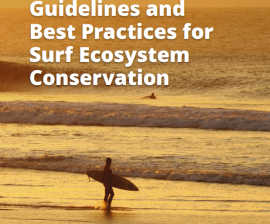
Surf ecosystems support biodiversity, cultural heritage, and local economies. With over 5,000 mapped surf breaks globally, many are in ecologically rich areas that store carbon and sustain marine life. Surfing generates an estimated US $50 billion annually, providing