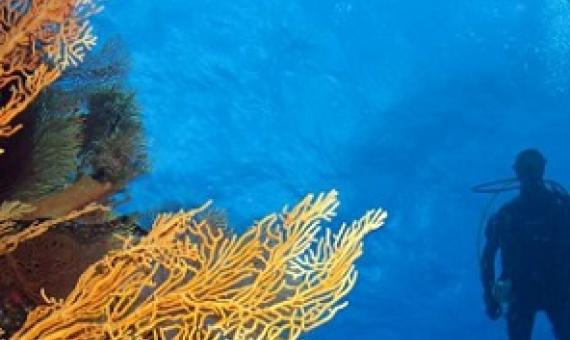
Yesterday, New Caledonia’s government voted to highly protect 10% of the 1.3 million-square-kilometre (501,932-square-mile) Natural Park of the Coral Sea, which encompasses New Caledonia’s entire exclusive economic zone (EEZ) in the southwestern Pacific Ocean.
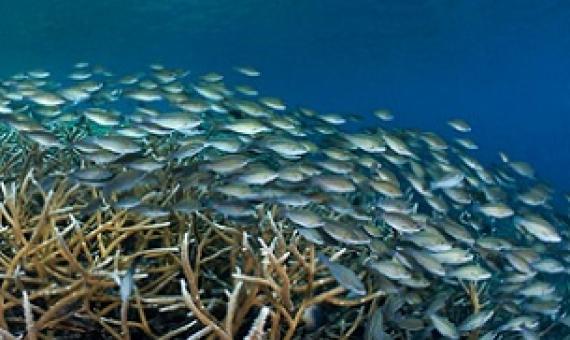
A new study of the Mesoamerican Reef in the Caribbean found that marine protected areas (MPAs) are not only beneficial for conservation but can also lift up the socioeconomic status of the local and Indigenous communities that live near them.
Fiji has followed robust and participatory processes involving multiple technical and conservation partners, agencies, Government, and the public in its marine protected area journey, says International Union for the Conservation of Nature (IUCN) Oceania regional director Maria-Goreti Muavesi.&nb
Fiji needs to set up marine protected areas (MPAs) and marine managed areas (MMAs) outside i qoliqoli boundaries in its Exclusive Economic Zone (EEZ) to meet its commitment to protecting 30 per cent of its marine areas.
In a paper published today in Nature, researchers from the California Academy of Sciences, University of São Paulo, University of Oxford, University of Exeter, and other collaborators reveal the extent of plastic pollution on coral reefs, finding that debris increases
National Geographic Pristine Seas, in collaboration with the Governments of Niue (GON) and Tofia Niue, embarked today on a scientific survey to document marine biodiversity in the small island nation known for its crystal clear waters teeming with sea life—from humpback whales to mari
Conservation International Pacific has expressed its concerns about the high-levels of deforestation in the country which is affecting biodiversity in certain areas.
The Lau Seascape has the potential to set the narrative for the Fijian government to test its goals in achieving the National Oceans Policy, which states that by 2030 Fiji would like to have 100 per cent management of its economic exclusive zone and 50 per cent of marine protected area.
Last week saw the commemoration of World Hydrography Day 2023, a global event dedicated to raising awareness about the crucial field of hydrography and its role in supporting the sustainable use of our oceans.
Protecting the ocean and providing livelihoods and food security do not have to be mutually exclusive.