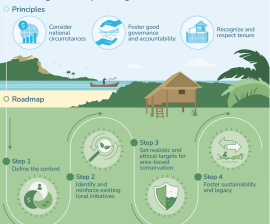
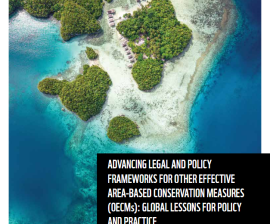
Target 3 of the Convention on Biological Diversity’s (CBD) Kunming-Montreal Global Biodiversity Framework calls for the protection of 30% of terrestrial areas, inland waters, and marine and coastal areas through area-based conservation (protected areas and other effective conservation measures) b
The Kunming–Montreal Global Biodiversity Framework (GBF) outlines targets for protecting and restoring biodiversity by 2030, with the vision of “living in harmony with nature” by 2050.
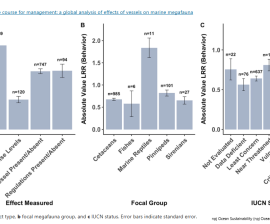
Vessel traffic represents one of the most pervasive and escalating sources of disturbance in marine environments, affecting organisms through noise, physical presence, habitat degradation, collisions, and pollution.
Last week, firecrackers went off around the world in celebration of the Lunar New Year. According to the Chinese zodiac, 2026 welcomes the year of the Fire Horse – a symbol of vitality, energy and momentum.
Mangrove forests, located along tropical and subtropical coastlines, are increasingly recognized for their role in buffering climate disasters, storing carbon, supporting wildlife and livelihoods.
The world has four years left to achieve the Convention on Biological Diversity (CBD) Kunming–Montreal Global Biodiversity Framework Target 3, which calls for the conservation of at least 30% of planet Earth by 2030 (the 30×30 target).
Ocean sustainability demands interdisciplinary knowledge. While interdisciplinary collaborations involving the natural sciences are common, few have also included the ocean humanities despite the entanglement of human culture and history with the ocean. We
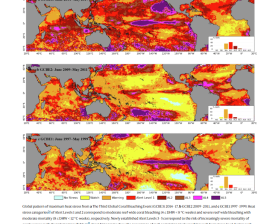
Ocean warming is increasing the frequency, extent, and severity of tropical-coral bleaching and mortality. During 2014–2017, marine heatwaves caused the Third Global Coral Bleaching Event. We analyze data from 15,066 reef surveys globally during 2014–2017.