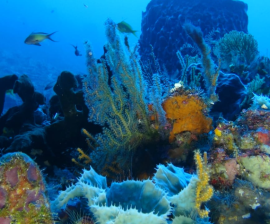
The people of the Pacific rely heavily on the resources of the land and sea for their social, cultural and economic well being. For thousand of years, they have lived in harmony with nature.
In public finance, some costs are politely kept off the books. The ocean has long been one of them. Governments often speak of “blue growth” and “sustainable use,” yet many policies still treat marine ecosystems as a kind of free input: available, resilient, and cheap to replace.
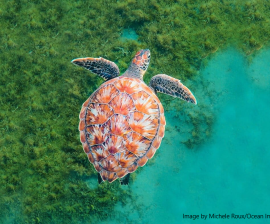
Seagrass meadows might not catch the eye like coral reefs, but they play an important and often unsung role in coastal protection, particularly as climate change increasingly eats away at shorelines.
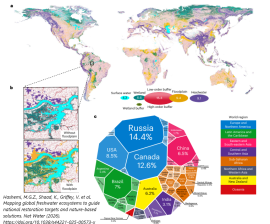
Freshwater ecosystems regulate the water cycle, support biodiversity and enhance resilience, yet they remain largely overlooked in global climate policies, and most national commitments lack clear, spatially defined targets for their protection and restoration.
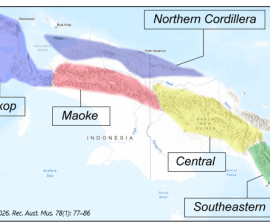
A review of the geology, palaeontology, genetic, and morphology studies indicates that during the mid-Miocene to Pliocene, New Guinea consisted of four island Blocks (Vogelkop, Maokop, Central, and Southeastern). The initial dispersal of marsupials from Australia was into the Vogelkop Block.
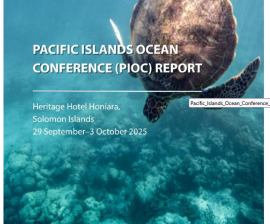
The core objective of the conference was to provide a cross-disciplinary space that fosters new knowledge, inspires learning, and strengthens the science–policy interface.
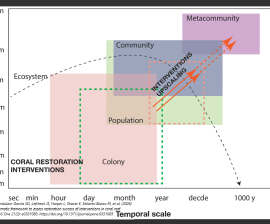
An ecosystem is defined as a collection of organisms that move energy within and outside of a system, while sustaining both the system itself and the multiple services that benefit humanity.
Equitable ocean governance is critical, as the oceans are essential to the planetary system and global health.oceans cover 71% of Earth’s surface and are crucial to our planet’s life-support system.
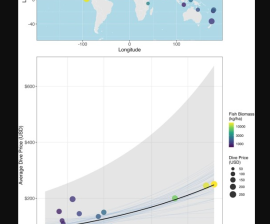
A prosperous blue economy in coastal areas requires operational models that clearly link ecological outcomes to economic returns. These models can support investment, planning, and the growth of non-extractive economies that benefit both coastal communities and the environment.
Coral reefs face catastrophic collapse. Thermal tipping points for widespread, irreversible dieback have already been passed at 1.2–1.4°C of global warming.