The Lalomanu leaders, Pulega a Alii ma faipule, and Afioga Fuataga Iakopo Faasii Faatiga II, wish to dedicate a part of their land to establish the Lua o Fafine Conservation Area.
The first edition of the State of Finance for Forests (SFF) report provides an overview of global public and private financial flows to forests in 2023, comparing these finance flows to the investment needed to unlock forests' potential to address climate change, biodiversity loss and land degrad
Title 27 of the Palau National Code as amended by the Act (SIXTH OLBIIL ERA KELULAU) to Amend Chapter 1 of Title 27 of the Palau National Code defines the exclusive economic zone of Palau as adjacent to the contiguous zone.
Maritime zones and boundaries offer economic, social, cultural, and sustainable development opportunities to coastal states around the world. From territorial waters (12NM), to exclusive economic zones (200NM), to extended continental shelf areas, these zones determine what it is within
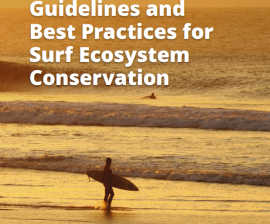
Surf ecosystems support biodiversity, cultural heritage, and local economies. With over 5,000 mapped surf breaks globally, many are in ecologically rich areas that store carbon and sustain marine life. Surfing generates an estimated US $50 billion annually, providing
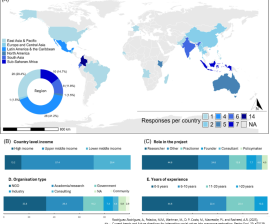
Despite the recent rise in mangrove restoration projects, the extent to which many projects include social dimensions remains contested, with limited research informing insights from on-ground projects.
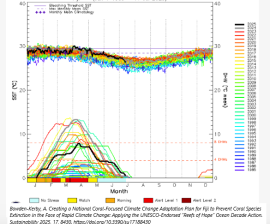
In the face of recent setbacks to coral reef conservation and restoration due to intensifying marine heat waves, new coral-focused strategies have been developed to accelerate natural processes of coral reef adaptation and recovery.
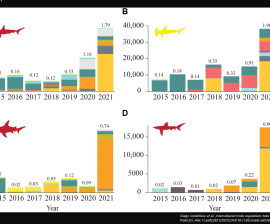
International trade is a major driver of shark overexploitation. In 2013, five threatened shark species were listed on Appendix II of the Convention on International Trade of Endangered Species to regulate global trade and promote recovery.
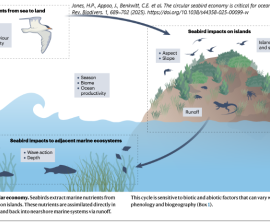
Nearly a third of seabird species are at risk of extinction, rendering them among the most threatened bird taxa globally. The decline in seabird populations has major ramifications for their associated ecosystems.
Despite playing an essential role in safeguarding food security, livelihoods, and human well-being, biodiversity is in precipitous decline globally with devastating social, environmental, and economic impacts (Pörtner et al. 2023).