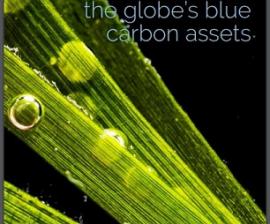
Over the last decades scientists have discovered that seagrass meadows, tidal marshes, and mangroves – “blue carbon” ecosystems – are among the most intensive carbon sinks in the biosphere.
Monitoring of marine protected areas (MPAs) is critical for marine ecosystem management, yet current protocols rely on SCUBA-based visual surveys that are costly and time consuming, limiting their scope and effectiveness.
The Key Biodiversity Areas and Important Bird Areas (KBA's
& IBA's) approach is a simple, effective means of
implementing the protected areas elements of the Convention of Biological Diversity (CBD). KBAs and IBAs are places of
The Main Species Of holothurian exploited in the Sputh Pacific are Holothuria scabra, H. Fuscogilva And H. nobilis, which have high commercial value , Actinopyga echinites, A. Miliaries And Thelenota ananas Of medium commercial value, And Holothuria atra, H. fuscopunctata and H.
More is known about birds response to climate change to date than for any other animal group, mostly as a result of many species- and location-specific analyses. Yet of the global or international-scale analyses of biodiversity and climate change, very few concentrate on birds in particular.