Climate-driven redistribution of tuna threatens to disrupt the economies of Pacific Small Island Developing States (SIDS) and sustainable management of the world’s largest tuna fishery.
Many species of sharks are threatened with extinction, and there has been a longstanding debate in scientifc and environmental circles over the most efective and appropriate strategy to conserve and protect them.
Setting targets for addressing major planetary concerns is an essential prerequisite for concerted global action (both inside and outside multilateral environmental agreements) and is necessarily a societal and political process, requiring negotiation and convergence among oftenconflicting intere
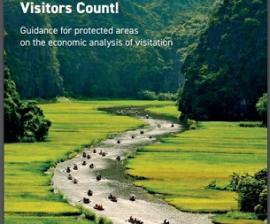
This guidance document aims to build awareness, knowledge, and capacity internationally on how to best undertake economic evaluations of tourism in protected areas, and thereby contribute towards a globally acknowledged standard methodology.
This brief seeks to bring clarity to the question of what could count toward the 30% global minimum target. within the context of recognized area-based conservation measures and their ability to deliver positive long-term conservation outcomes.
This publication has been developed as a contribution to Phase II of the Two-phase Strategy on Protected Areas of the Secretariat of the Convention on Biological Diversity (CBD) and prepared pursuant to various paragraphs of COP decision XIII/2 on protected areas, in particular paragraph 5(a-e),
Recognizing the imperative to evaluate species recovery and conservation impact, in 2012the International Union for Conservation of Nature (IUCN) called for development of a“Green List of Species” (now the IUCN Green Status of Species).
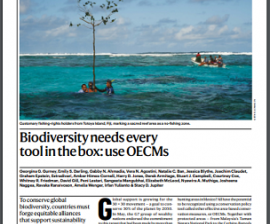
Global support is growing for the 30 × 30 movement — a goal to conserve 30% of the planet by 2030. In May, the G7 group of wealthy nations endorsed the commitment to this target that had been made by more than 50 countries in January.