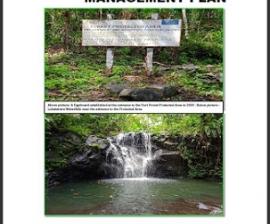
This Management Plan was prepared by the representatives of the Vuri Clan of Sikipozo Tribe in partnership with the Natural Resources Development Foundation (NRDF), Ecological Solutions Solomon Islands (ESSI), World Wide Fund for Nature (WWF-SI), the Ministry of Forestry and Research (National He
The Pacific Islands Regional Marine Species Programme (Marine Species Programme) of the Secretariat of the Pacific Regional Environment Programme (SPREP) is a regional strategy for conserving and managing dugong, marine turtles, whales and dolphins, sharks and rays, and seabirds, referred to thro
The twin crises of climate change and biodiversity loss have brought into stark relief the need for greater collaboration and action at the international level to conserve, manage, and restore coral reefs.
As 2020 approaches, countries are accelerating their commitments to protect 10% of the ocean by establishing and expanding marine protected areas (MPAs) and other area-based protections.
INEA has featured many articles covering the dilemmas, puzzles, and tensions related to global biodiversity governance; this coverage was infrequent in earlier issues but has steadily increased as both environmental diplomacy and international law on biodiversity conservation and environmental ju
This guidance document identifies the best options for successful delivery of draft Target 3 of the Global Biodiversity Framework (GBF) from the Convention on Biological Diversity (CBD). There is good evidence that this will radically increase the success of biodiversity conservation.
Accelerating ecosystem degradation has spurred proposals to vastly expand the extent of protected areas (PAs), potentially affecting the livelihoods and well-being of indigenous peoples and local communities (IPLCs) worldwide.
Island and coastal nations need to protect their waters to keep the oceans healthy. But they often have lots of debt and aren't able to prioritize ocean conservation over other needs.