Central Africa supports an incredible biodiversity, and its inland waters are no exception. The Congo River has the highest species diversity of any freshwater system in Africa, and is second in species richness globally, after the Amazon.
Sustainable development Goal 14 of the United Nations aims to "conserve and sustainably use the oceans, seas and marine resources for sustainable development".
Systematic conservation planning identifies priority areas to cost-effectively
meet conservation targets. Yet, these tools rarely guide wholesale declaration
of reserve systems in a single time step due to financial and implementation
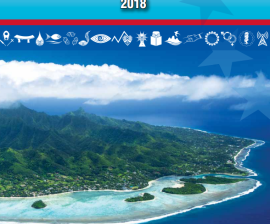
The 2018 SOE is a new baseline for future reports and can help the Cook Islands with national regional and international reporting obligations including multi-lateral environmental agreements.Available onlineCall Number: 333.7209623 COO, [EL]ISBN/ISSN: 978-982-04
The World Bank’s sixth environment and social standard [ESS6] recognizes that protecting and conserving biodiversity and sustainably managing living natural resources are fundamental to sustainable development. Call Number: [EL]Physical Description: 1:39:24
Insufficient data for baseline Biodiversity Assessment form the Pacific Islands and Countries (PICs). Most PICs lack taxonomic/ecological data to inform the biodiversity assessments/reports.Call Number: [EL]Physical Description: 4 p.
The blue economy is an approach put forward by the international community to take into account the health of the oceans and seas as we strive to balance the three dimensions of sustainable development: economic, social and environmental.