Marine litter is a growing global problem that impacts biodiversity and human societies alike. South-east Asis suffers significant impacts due to high biodiversity, dense human populations, and larger volumes of plastics entering the marine environment, primarily through rivers.
The Pacific BioScapes Programme is providing support to develop new Regional Marine Tourism Guidelines that incorporate best practice engagement for the environment and marine species.Physical Description: 1 p.
The Pacific BioScapes Programme aims to strengthen the protection of key coastal ecosystems that support climate resilience, livelihoods and the human wellbeing of over 30,000 people in the Central Islands Province of the Solomon Islands.
This document was prepared by the Ministry of Environment, Climate Change, Disaster Management and Meteorology (MECDM) and the Ministry of Fisheries and Marine Resources (MFMR) with technical support from the Secretariat of the Pacific Regional Environment Programme (SPREP) through the By-catch a
The Pacific BioScapes Programme is providing support to the Pacific Islands Protected Area Portal to strengthen access to Pacific biodiversity information and communication for enhanced decision making.
The formulation of this National Plan of Action (NPOA): Marine Turtles (2023–2027) has been developed by the Solomon Islands Marine Turtle Working Committee (SIMTWC) nominated by the Ministry of Environment, Climate Change, Disaster Management and Meteorology (MECDM).
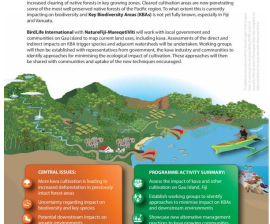
The rapid expansion of kava farms, and the increase in market value for the plant, has resulted in an increased clearing of native forests in key growing zones. Cleared cultivation areas are now penetrating some of the most well preserved native forests of the Pacific region.
The Pacific BioScapes Programme aims to assist implementation of the Protected Areas Network Policy Framework in the Federated States of Micronesia through supporting the operations of the Protected Areas Network at national and state levels.