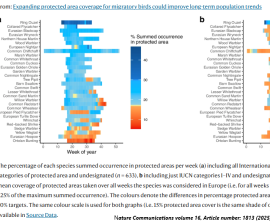
Populations of many migratory taxa have been declining over recent decades. Although protected areas are a cornerstone for conservation, their role in protecting migratory species can be incomplete due to the dynamic distributions of these species.
The Pacific BioScapes Programme is strengthening regional and national decision-making processes for sustainable management and use of coastal and marine biodiversity by improving the use of information and communication technologies for data management and analysis.
The Pacific BioScapes Programme is supporting local community monitoring of coastal ecosystem resilience on the islands of Maninita, Taula, Fangasito, Fonua’one’one, Mu’omu’a and Fua’amotu in the Vava’u group.
ABC, Project Wild visits Tonga to witness the efforts by three ladies, from the Vava'u Environmental Protection Association (VEPA) to save the Tongan Whistler (an endemic bird to Tonga), by eradicating rats with bait stations and removing other food sources such as the Invasive weed - Lopa.
The International Organization for Migration (IOM) was engaged by the Government of the Republic of the Marshall Islands (RMI) to lead community engagements on the National Adaptation Plan (NAP) in eight Atolls.
The Pacific BioScapes Programme is providing assistance to establish electronic eCITES automated support for trade permitting and reporting systems to support compliance for the Convention on International Trade in Endangered Species (CITES) in the Pacific.
This guideline provides practical, science-based information for tourism operators and tourism regulators who want to offer the best possible experience to their customers, while conserving species and habitats and making a positive contribution to local communities.
The Pacific BioScapes Programme is providing support to the Inform Environmental Data Portal to strengthen countries’ capacity for environmental reporting and decision‐making and facilitate reporting for the the CBD Post‐2020 Global Biodiversity Framework.Call Number: [EL]