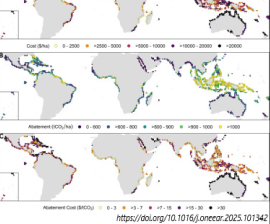
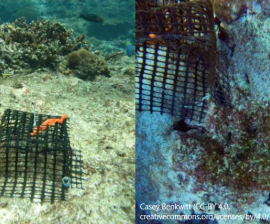
Mangroves provide numerous ecosystem services and are increasingly recognized as a natural climate solution. As a result, multiple recent initiatives have set ambitious mangrove restoration targets.
This guidance aims to inform the planning, design, and implementation of new and expanded MPAs, OECMs, areas conserved by Indigenous peoples, and networks of protected and conserved areas at the community, national, and international levels.
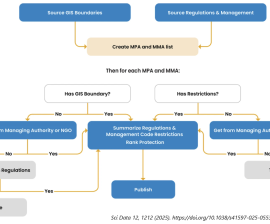
Comprehensive, global, and standardized data on ocean regulations are essential to assess protection levels. They are also key to successfully measuring progress towards 30 × 30 goals.
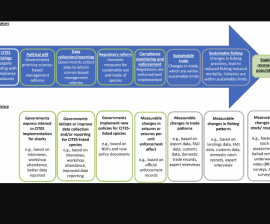
International wildlife trade contributes to the loss of biodiversity and has driven several terrestrial and aquatic species to extinction. Sharks and rays are some of the most threatened vertebrates, with overfishing considered the primary threat causing substantial global population declines.
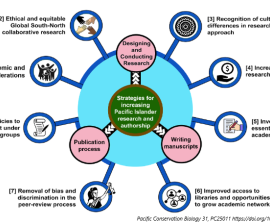
Disseminating research through academic publishing is essential for contributing to global knowledge, advancing critical fields and finding solutions to humanity’s challenges.
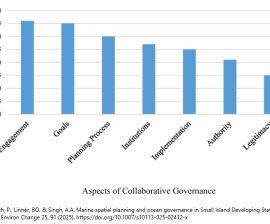
Marine spatial planning (MSP), initially developed to address the needs of the global North, is gaining significant traction in Small Island Developing States (SIDS) and is hailed as a collaborative governance instrument for managing and optimizing the allocation of ocean space.
Natural and mixed World Heritage (WH) has generally not been a success in the Oceania region, due to limited support at all levels, unrealistic expectations about what WH can and cannot deliver, and a lack of resources to support all aspects of the WH process, particularly WH site management.
The sea turtle conservation community has made remarkable strides in globalscale priority setting in recent decades thanks to the collective efforts of nongovernmental organizations (NGOs), universities, and local communities.
Whales and dolphins rely on critical ocean habitats – areas where they feed, mate, give birth, nurse young, socialize, and migrate – for their survival. These areas are connected by migratory pathways known as blue corridors, essential to their life cycle.