Here we report the findings from the Marine Rapid Assessment Survey of the coral reefs of the northwest lagoon (Yandé to Koumac) of Nouvelle Calédonie.
This report presents the results of a rapid field assessment of Milne Bay Province, which encompasses the extreme southeastern tip of mainland Papua New Guinea and an extensive offshore area immediately eastward.
Biologically, New Ireland has remained one of the least studied regions of Papua New Guinea (PNG), and the mountainous southern zone has been considered both a high priority for biodiversity conservation and a major “scientific unknown” (Beehler 1993).
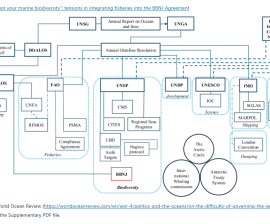
The 2023 Biodiversity Beyond National Jurisdiction (BBNJ) Agreement aims to conserve and sustainably use marine biodiversity in areas beyond national jurisdiction. However, separating fisheries from broader conservation frameworks has led to fragmented governance.
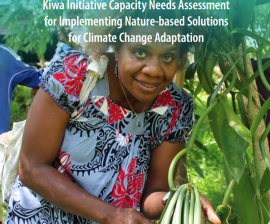
This assessment identifies the capacity-building needs and priorities of local and national public authorities and institutions, representatives from civil societies and communities, and NGOs from the 19 Kiwa-eligible PICTs to: 1.
Context. Traditional Ecological Knowledge (TEK) is lost due to the increase of urbanisation, and the lack of transfer of this knowledge to younger generations. Aims.
In the early 1980s Spring’s report on marine turtle species distribution indicated there were 6 species of turtles that could be found in PNG water including the green, hawksbill, leatherback, loggerhead, olive ridley and the flatback turtles.
There are 102 species of reptiles and 25 species of frogs known from the Trans-fly region. 29 of the reptiles and one of the frogs are of special conservation concern. Seven of these species are of high conservation concern: 2 turtles, a monitor lizard, three snakes, and one frog.