The purpose of the document is to help increase access to existing guidance material on synergies among biodiversity-related conventions and to provide a basis for identifying gaps in the available guidance.
Communities dependent on natural resources for food and livelihoods are extremely vulnerable to climate change and its impacts. Tropical cyclones are a frequent occurrence in the Pacific and can have devastating impacts on coastal communities, particularly in remote or isolated areas.
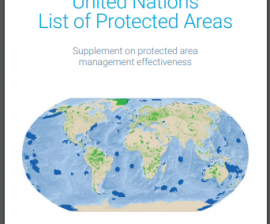
The 2018 UN List provides up-to-date information on marine and terrestrial protected areas globally, and identifies those protected areas that have been the subject of management effectiveness evaluations.
This Pacific Sustainable Development Report 2018 (PSDR) is the first quadrennial Pacific progress report on sustainable development. The report outlines high level trends on progress to date, as well as baseline information.
All forms of tourism create environmental impacts, but these differ by orders of magnitude. At one end of the scale are minimal-impact wilderness travellers, either on foot or by water.
These guidelines, prepared by the Privately Protected Areas and Nature Stewardship Specialist Group of the IUCN World Commission on Protected Areas, offer a range of best practices for establishing PPAs and securing effective longterm conservation on private properties.
This report explores the role of traditional marine resources management in meeting both the goals of communities and those of national and international conservation strategies.
Understanding the scale, location and nature conservation values of the lands over which Indigenous Peoples exercise traditional rights is central to implementation of several global conservation and climate agreements.
This booklet is part of a series of compilations assembling PANORAMA solution case studies on a defined topic. “Solutions in Focus” zooms in on a topic of interest covered by PANORAMA, allowing to explore common elements and shared learnings across success stories.