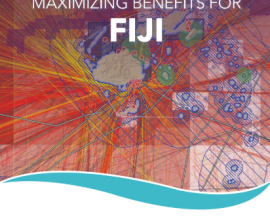
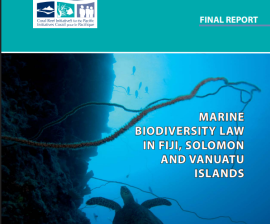
While the ocean covers more than two thirds of the Earth’s surface, the oceanic territory of Fiji is 70 times larger than its land territory. With an exclusive economic zone (EEZ) of 1.29 million km 2 , Fiji is a large ocean state.
Fiji is committed to the sustainable use of its marine resources and conserving its marine biodiversity. This commitment has been ratified through Fiji’s international responsibilities and obligations under the United Nations Convention on Biological Diversity (UNCBD).
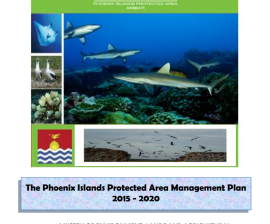
The Phoenix Islands lie in the heart of the Pacific Ocean and are one of the most remote island chains on Earth. They are located approximately halfway between Fiji and Hawaii. The largest atoll, Kanton, is 1,750 km (1,087 miles) from the Kiribati capital Tarawa.
This paper is based on presentations and discussions held during a marine managed areas (MMAs)2session organised by NOAA, SPREP and Conservation International (CI) as part of the “Our Seas of Islands” Regional Forum for Oceania on MMAs convened by
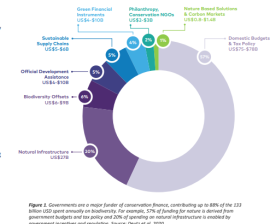
Coral reefs face threats from climate change and local pressures, but many initiatives designed to deliver conservation outcomes for them and the social-economic systems they support are limited by sustainable finance and the availability of funds over the long term.
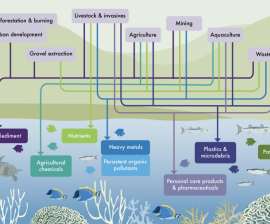
The health and integrity of coral reef ecosystems are in decline worldwide due to an increasing suite of human activities, which threaten biodiversity and human wellbeing. One of the major drivers of coral reef ecosystem decline is poor water quality from human activities on land.
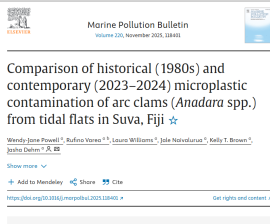
Microplastic pollution threatens marine ecosystems, especially in vulnerable regions like the Pacific Islands. This study examines temporal trends by comparing Anadara spp. specimens from Fiji's tidal flats in the 1980s and 2023–2024.
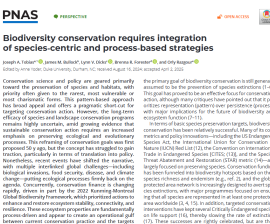
Conservation science and policy are geared primarily toward the preservation of species and habitats, with priority often given to the rarest, most vulnerable or most charismatic forms.
The research agreement signed on 19th December 2005 by the Institute of Research for Development (IRD), the University Paul Sabatier (Toulouse III) and Nantes University, the Pharmacochemical laboratories of Natural Substances and Pharmacophores Redox (UMR 1165) and the Centre of Maritime and Oce
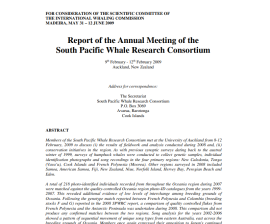
Members of the South Pacific Whale Research Consortium met at the University of Auckland from 8-12 February, 2009 to discuss (i) the results of fieldwork and analysis conducted during 2008 and, (ii) conservation initiatives in the region.