Working at IUCN means joining a dedicated and diverse team of experts based all over the world. IUCN is an equal opportunity employer and does not discriminate in its recruitment practices, welcoming applications from all qualified people.
Biodiversity is suffering dramatic declines across the globe, threatening the ability of ecosystems to provide the services on which humanity depends. Mainstreaming biodiversity into the plans, strategies and policies of different economic sectors is key to reversing these declines.
Difficulties in scaling up theoretical and experimental results have raised controversy over the consequences of biodiversity loss for the functioning of natural ecosystems.
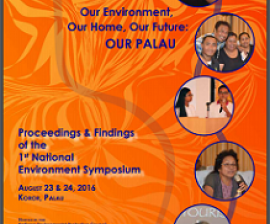
Demonstrating the remarkable power of collaboration and big thinking that Palau so often exhibits, in 2016 a diverse partnership produced the nation’s 1st National Environment Symposium.
In 2010, Parties to the Convention on Biological Diversity (CBD) adopted the Strategic Plan for Biodiversity 2011–2020, and its 20 Aichi Biodiversity Targets, to catalyze national and international conservation efforts and reverse negative biodiversity trends.
Scientists have advocated for local interventions, such as creating marine protected areas and implementing fishery restrictions, as ways to mitigate local stressors to limit the effects of climate change on reef-building corals.
Vanuatu signed and ratified the United Nations Convention on Biological Diversity (UNCBD) joining other 190 CBD parties to protect our global biodiversity. Vanuatu’s first National Biodiversity Strategy and Action Plan (NBSAP) was developed and endorsed in November 1999.
This report is the outcome of a review commissioned by the Protected Areas Learning and Research Collaboration (PALRC) in 2018, with the following aims:
With marine biodiversity declining globally at accelerating rates, maximising the effectiveness of conservation has become a key goal for local, national and international regulators.