Marine fisheries throughout the world are in serious decline due to overharvesting (National Research Council, 2001), and management for sustainable fisheries requires effective tactics for limiting exploitation rates.
Protected areas (PAs) are the main instrument for biodiversity conservation, which has triggered the development of numerous indicators and assessments on their coverage, performance and efficiency.
The great majority of marine protected areas (MPAs) fail to meet their management objectives. So MPAs can be effective conservation tools, we recommend two paradigm shifts, the first related to how they are located and the second related to how they are managed.
Long-term ecological monitoring of reef fish populations often requires the simultaneous collection of data on benthic habitats in order to account for the effects of these variables on fish assemblage structure.
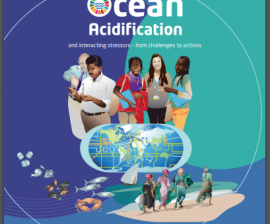
The ocean has been experiencing substantial changes in marine physics, chemistry and biology including ocean acidification, rising seawater temperature, ocean deoxygenation and sea level rise.
The term “green growth” and its sister concepts, “blue‐ green growth,” the “green economy,” and the “blue‐ green economy,” have gained considerable traction in the Pacific island region in a short space of time.
Employees are at the heart of accomplishing WWF-Pacific's mission to conserve nature. From scientists to IT specialists to communications officers, we require a multi-disciplinary, diverse and motivated team who align with our core values.
Working at IUCN means joining a dedicated and diverse team of experts based all over the world. IUCN is an equal opportunity employer and does not discriminate in its recruitment practices, welcoming applications from all qualified people.