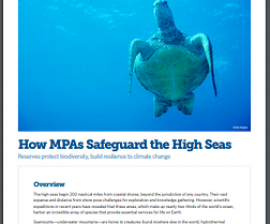
The high seas begin 200 nautical miles from coastal shores, beyond the jurisdiction of any country. Their vast expanse and distance from shore pose challenges for exploration and knowledge gathering.
For over 40 years, hydrothermal vents and the communities that thrive on them have been a source of profound discovery for deep-sea ecologists. These ecosystems are found throughout the world on active plate margins as well as other geologically active features.
Low-cost, portable, observation-class, underwater remotely operated vehicles (microROVs), which can be transported and operated by a single user, are increasingly common tools in scientific, industrial, commercial, and recreational ocean application.
States at the United Nations have begun negotiating a new treaty to strengthen the legal regime for marine biodiversity in areas beyond national jurisdiction.
This Toolkit offers a suite of simple tools for collecting the sound scientific data needed for the conservation and sustainable management of shark and ray populations.
This Guide has been produced to provide practical, science-based advice on how to maximize the effectiveness of both new and existing shark and ray MPAs, to ensure these animals are protected now and far into the future.
Connectivity of protected areas (PAs) is needed to ensure the long-term persistence of biodiversity and ecosystem service delivery. The Convention on Biological Diversity agreed in 2010 to have 17% of land covered by wellconnected PA systems by 2020 (Aichi Target 11).
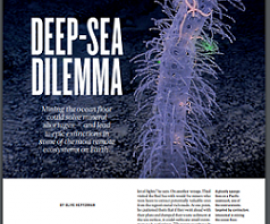
The deep sea — usually defined as the realm below 200 metres — is a world of extremes. Temperatures near the sea bed in many places hover near 0 °C, there is next to no light, and pressures can exceed 1,000 bars, equivalent to having a couple of elephants standing on your big toe.
The oceans are facing more threats now than at any time in history. Yet a nascent industry is ramping up to exert yet more pressure on marine life: deep sea mining.