Land degradation and the loss of biological diversity are two of the most pressing environmental threats facing humanity. Both are eroding the planetary life support systems on which the prosperity and well-being of current and future generations depend.
New Guinea is the most biologically and linguistically diverse tropical island on Earth, yet the potential impacts of climate change on its biocultural heritage remain unknown.
A key feature of life’s diversity is that some species are common but many more are rare. Nonetheless, at global scales, we do not know what fraction of biodiversity consists of rare species.
Politicians, economists and even some natural scientists have tended to assume that tipping points1 in the Earth system — such as the loss of the Amazon rainforest or the West Antarctic ice sheet — are of low probability and little understood.
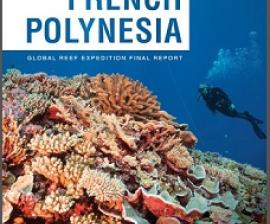
The Khaled bin Sultan Living Oceans Foundation has released their findings from the largest coral reef survey and mapping expedition ever conducted in French Polynesia.
As 2020 approaches, countries are accelerating their commitments to protect 10% of the ocean by establishing and expanding marine protected areas (MPAs) and other area-based protections.
This planet is the home of life, born into existence and transformed over 3.8 billion years into a continuous tapestry, covering all possible places from the deep ocean floors to mountain summits.
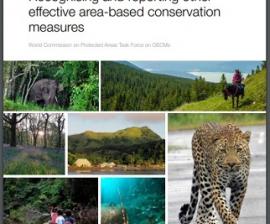
Many areas outside national and regional protected area networks also contribute to the effective in-situ conservation of biodiversity. Appropriately recognising, reporting and supporting such areas is increasingly important in the context of biodiversity loss and climate change.