Sustainable Development Goal 14 of the United Nations aims to “conserve and sustainably use the oceans, seas and marine resources for sustainable development”.
Local communities’ support for resource conservation projects are essential for their success. Nevertheless, in the Pacific Island countries, many community-based conservation (CBC) projects remain ineffective due to the lack of community members’ engagement.
Marine megafauna, the largest animals in the oceans, serve key roles in ecosystem functioning. Yet, one-third of these animals are at risk of extinction.
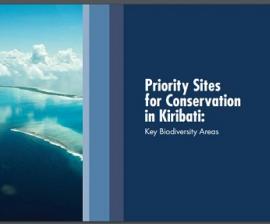
This KBA report outlines key recommendations for the Government of Kiribati and its people for protecting its unique biodiversity and supporting sustainable livelihoods. A total of twenty-two island KBAs were identified and suggested for immediate management.
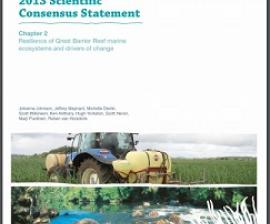
This chapter focuses on the temporal dynamics, spatial extent and cumulative impacts of current and future drivers of change on Great Barrier Reef water quality, and subsequent impacts on marine ecosystems in the Great Barrier Reef Marine Park.
This report summarises the first results of the Global Futures initiative – a partnership between WWF, the Global Trade Analysis Project and the Natural Capital Project – which has developed an innovative new model to calculate the impacts of nature’s decline on the world’s economies, trade and i
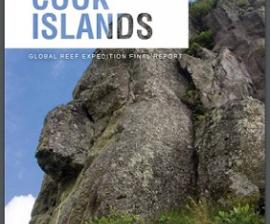
In April 2011, the Khaled bin Sultan Living Oceans Foundation (KSLOF) embarked on the Global Reef Expedition (GRE)- the largest coral reef survey and mapping expedition in history. The GRE was a rigorous five-year scientific mission to study coral reefs around the world.
The question of how to efficiently and effectively manage ocean resources in a sustainable way has reached the forefront of discussion at an international level, but women's contributions to this process have been underestimated or unrecognized.