The adoption of effective fisheries conservation and management measures (‘CMM’) represents a critical stage in the process of sustainably managing global fishing stocks.
The development of a new international legally binding instrument for the conservation and sustainable use of marine biodiversity beyond national jurisdiction (BBNJ agreement) is in the final negotiation phase.
The current report, based on the work of over 100 economists/scientists, analyses the global economic implications of a 30% PA target for agriculture, forestry, fisheries, and the PA/nature sector itself.
The current report, based on the work of over 100 economists/scientists, analyses the global economic implications of a 30% PA target for agriculture, forestry, fisheries, and the PA/nature sector itself.
The second edition of the Newsletter of the IUCN World Commission on Protected Areas Oceania (WCPA Oceania) for 2020 is now available.
Full Newsletter (Pdf)
With the establishment of the United Nations Sustainable Development Goals (SDGs) in 2015, the Human Development Forum launched a series of publications entitled A Better World, each volume dedicated to one of the 17 SDGs.
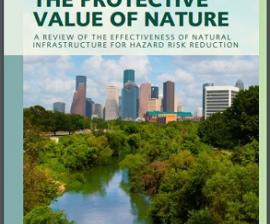
The Protective Value of Nature summarizes the latest science on the effectiveness of natural infrastructure in lowering the risks to communities from weather- and climate-related hazards—benefits that we often describe as “natural defenses.” Over the past two decades, the body of research evaluat