Community Based Management resources
The future of ocean conservation lies in community leadership backed by science and philanthropy
As the global community accelerates efforts towards the 30x30 target — protecting 30% of the ocean by 2030, as agreed under the Convention of Biological Diversity — marine conservation has entered a decisive phase.
The Future of Our Ocean is in Our Hands: An Update on the Palau National Marine Sanctuary
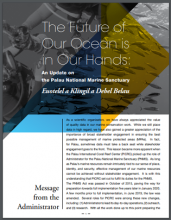
Palau’s Exclusive Economic Zone (EEZ), with a total of 500,238 km2 (over 300,000 mi2 ), became a multi-zoned national MPA in 2015, through the Palau National Marine Sanctuary Act.
The Global Deep Sea Exploration Goals: A representative approach to visually observing the deep seafloor
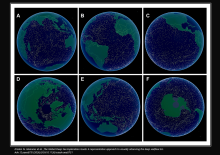
The Global Deep Sea Exploration Goals strategy is a spatially balanced, probability-based, actionable global sampling design identifying 10,000 target locations for deep-sea visual observation (≥200 m).
The hidden cost of fisheries subsidies
In public finance, some costs are politely kept off the books. The ocean has long been one of them. Governments often speak of “blue growth” and “sustainable use,” yet many policies still treat marine ecosystems as a kind of free input: available, resilient, and cheap to replace.
The High Seas: Earth’s Last Wild Frontier at Risk
The high seas – the vast waters beyond national jurisdiction – cover nearly two-thirds of our planet.
The impact of tropical cyclones Pam, Harold, Winston and Yasa on tree cover loss in Vanuatu and Fiji
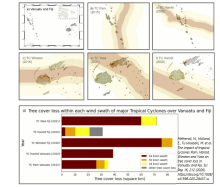
Many Pacific Small Island Developing States are vulnerable to Tropical Cyclones (TCs) leading to an estimated average annual loss of USD 1.08 billion.
The Important Marine Mammal area Network: A Tool for Systematic Spatial Planning in Response to the Marine Mammal Habitat Conservation Crisis
The Important Marine Mammal Areas (IMMAs) initiative was launched by the Marine Mammal Protected Areas Task Force of the International Union for the Conservation of Nature in 2016, as a response to a conservation crisis in the protection of marine mammals and wider global ocean biodiversity.
The new SPREP film 'Mareva and the Sea' is now on YouTube

Watch this new film and join Mareva and her community as they learn about marine spatial planning in the Pacific. They witness a ship running aground and damaging their local reef. Then they become motivated to speak up about protecting their island and the ocean around it!
The new World Ocean Review: Explaining life in the ocean
Life on Earth is linked inseparably with the ocean. It covers around 71 per cent of the surface and is the largest habitat on our planet. Much of its species diversity is still unknown – and yet it is vital for human well-being.
The Ocean Equity Index
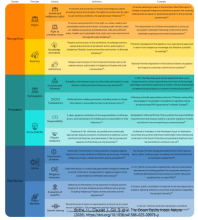
The ocean is essential for humanity1,2,3. Yet, inequity in ocean-based activities is widespread and accelerating4,5,6,7,8. Addressing this requires governance approaches that can systematically measure equity and track progress9.
The ocean’s enforcement gap
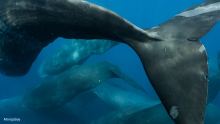
On paper, the sea is increasingly protected. Governments have designated vast marine protected areas (MPAs) and pledged to conserve 30% of the ocean by 2030. Maps shaded in reassuring blues now circulate widely. Yet the reality offshore often looks much the same as before.
The past as a lens for biodiversity conservation on a dynamically changing planet
We are in the midst of a major biodiversity crisis, with deep impacts on the functioning of ecosystems and derived benefits to people (1, 2). But we still have time to pull back. To do so, it is imperative that we learn from plants’ and animals’ past actions (3, 4).
The Phoenix Islands Protected Area Management Plan 2015 - 2020
The Phoenix Islands lie in the heart of the Pacific Ocean and are one of the most remote island chains on Earth. They are located approximately halfway between Fiji and Hawaii. The largest atoll, Kanton, is 1,750 km (1,087 miles) from the Kiribati capital Tarawa.
The PNG-METT : A method for assessing effectiveness in Papua New Guinea's protected areas
In 2015, 2016, the Government of Papua New Guinea (PNG), through its Conservation and Environmental Protection Authority (CEPA) and with the support of United Nations Development Program (UNDP), organised an evaluation of its protected areas, as part of the process to improve management eff
The relationship between Indigenous Peoples' lands and conservation: A systematic literature review
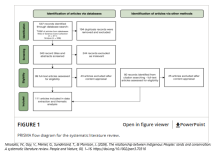
A growing body of peer-reviewed literature is focused on the relationship between Indigenous Peoples' lands (Indigenous lands) and conservation outcomes.
The Right to a Healthy Environment in Practice: A Decade Before the Courts (2015-2025)
Since its initial articulation in the early 1970s, the sphere of legislative and judicial practices regarding the right to a healthy environment (R2HE) has evolved substantially.
The role and value of science in shark conservation advocacy
Many species of sharks are threatened with extinction, and there has been a longstanding debate in scientifc and environmental circles over the most efective and appropriate strategy to conserve and protect them.
The Role of Coral Reef Small-Scale Fisheries for Addressing Malnutrition and Avoiding Biodiversity Loss
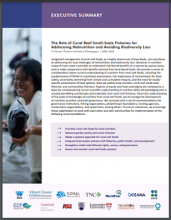
Integrated management of coral reef foods, as a highly diverse set of blue foods, can contribute to addressing the dual challenges of malnutrition and biodiversity loss.
The State of the World's Mangroves 2021
Mangroves are vital components of the planet coastal ecosystems. Mangroves sequester carbon at up to four times the rate of terrestrial forests, making them tremendous allies in our struggle for net-zero carbon emissions by 2050.
The status and conservation needs of the Micronesian Megapode (Megapodius laperouse laperouse) across the Mariana archipelago
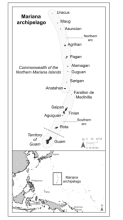
Accurate baseline data for wildlife populations are important to track trends of these
The ‘Blue Pacific’: ocean governance and planetary health
Equitable ocean governance is critical, as the oceans are essential to the planetary system and global health.oceans cover 71% of Earth’s surface and are crucial to our planet’s life-support system.
The ‘Paper Park Index’: Evaluating Marine Protected Area effectiveness through a global study of stakeholder perceptions
Governments around the world are increasingly committed to reaching terrestrial and marine conservation goals. But achieving such commitments is challenging, and conservation targets that are reached on paper, e.g., in terms of square kilometers protected, can be misleading.
Tonga National Marine Ecosystem Service Valuation
The exclusive economic zone of Tonga, nearly 700,000 km2 of ocean, is 1000 times larger than the country’s land area. Coastal and marine resources provide the Government of Tonga, businesses and households many real and measurable benefits.
Towards a guidance document for invasive species planning and management on islands
In 2012 a process was initiated to produce a guidance document for invasive species management on islands, as an objective of a regional invasive species project in the Western Indian Ocean (WIO) islands, implemented by IUCN.
Towards a systematic framework to assess restoration success of interventions in coral reef ecosystems
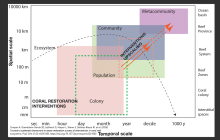
An ecosystem is defined as a collection of organisms that move energy within and outside of a system, while sustaining both the system itself and the multiple services that benefit humanity.
Towards an Understanding of Marsupial Interchange between Australia and New Guinea
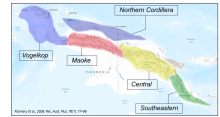
A review of the geology, palaeontology, genetic, and morphology studies indicates that during the mid-Miocene to Pliocene, New Guinea consisted of four island Blocks (Vogelkop, Maokop, Central, and Southeastern). The initial dispersal of marsupials from Australia was into the Vogelkop Block.
Trade regulations drive improved global shark and ray management
International wildlife trade contributes to the loss of biodiversity and has driven several terrestrial and aquatic species to extinction. Sharks and rays are some of the most threatened vertebrates, with overfishing considered the primary threat causing substantial global population declines.
Traditional Ecological Knowledge and practices associated with the Vanate (Raggiana Bird of Paradise, Paradisaea raggiana) along the Kokoda Track in Central Province, Papua New Guinea
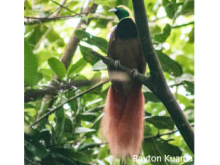
Traditional Ecological Knowledge (TEK) is lost due to the increase of urbanisation, and the lack of transfer of this knowledge to younger generations. Aims.
Traditional Ecological Knowledge and practices associated with the Vanate (Raggiana Bird of Paradise, Paradisaea raggiana) along the Kokoda Track in Central Province, Papua New Guinea
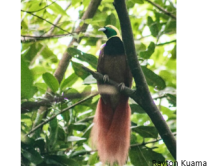
Traditional Ecological Knowledge (TEK) is lost due to the increase of urbanisation, and the lack of transfer of this knowledge to younger generations. Aims.
Traditional Ecological Knowledge and practices associated with the Vanate (Raggiana Bird of Paradise, Paradisaea raggiana) along the Kokoda Track in Central Province, Papua New Guinea
Context. Traditional Ecological Knowledge (TEK) is lost due to the increase of urbanisation, and the lack of transfer of this knowledge to younger generations. Aims.
Tropical mammal functional diversity increases with productivity but decreases with anthropogenic disturbance
A variety of factors can affect the biodiversity of tropical mammal communities, but their relative importance and directionality remain uncertain.
Turning the Tide for Coral Reefs: the ICRI Plan of Action 2021-2024
The twin crises of climate change and biodiversity loss have brought into stark relief the need for greater collaboration and action at the international level to conserve, manage, and restore coral reefs.
Turtle research and monitoring database: a TREDS of summary Pacific turtle data recorded from 1970 to 2018
The Turtle Research and monitoring Database System (TREDS) was developed in 1993, to allow members of the Secretariat of the Pacific Regional Environment Programme (SPREP) to store, collate, and organise their data for research, monitoring and reporting.
Twenty-five years of misinterpreting the biodiversity hotspot approach
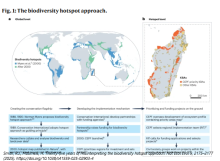
A quarter of a century after its publication, the biodiversity hotspot concept remains one of the most cited and influential frameworks in conservation science.
Underwater Cards for Assessing Coral Health on Indo-Pacific Reefs
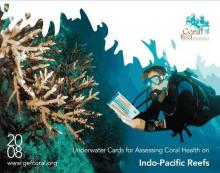
Beeden, R., Willis, B., Raymundo, L.J., Page, C.A., Weil, E.
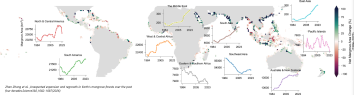
Unexpected expansion and regrowth in Earth’s mangrove forests over the past four decades
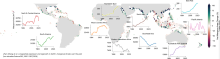
Mangrove forests are coastal habitats that serve as nurseries for economically important fisheries.
Unlocking the potential of other effective area-based conservation measures (OECMs) for achieving conservation targets: A global scoping review
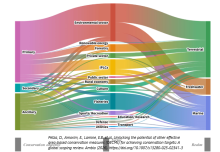
Other Effective Area-based Conservation Measures (OECMs), introduced by the Convention on Biological Diversity (CBD), refer to areas outside formal protected-area networks that deliver effective and enduring in situ biodiversity conservation.
Using Samoan traditional ecological knowledge to identify calls of the critically endangered endemic tooth-billed pigeon (Didunculus strigirostris)
The tooth-billed pigeon (Didunculus strigirostris) is an endemic and highly cryptic bird of the rainforest canopy of Samoa.
Utilizing Protected and Conserved Areas for Human Health and Well-being: A Technical and Methodological Framework
In recent years, social prescribing—particularly green prescribing and nature prescriptions—has rapidly gained popularity as a holistic approach to improving health and well-being by connecting individuals with nature-based activities and community support.
Valuing nature conservation
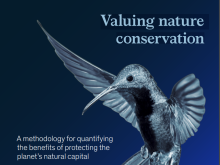
Rigorous analysis of opportunities to expand nature conservation can help determine where natural capital could have the biggest impact on climate, jobs, and health.
Vanuatu ecosystem and socio-economic resilience analysis and mapping (ESRAM)
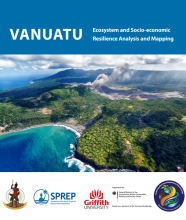
Ecosystem and Socio-economic Resilience Analysis and Mapping (ESRAM) is the first stage of PEBACC. This report presents the results of the ESRAM undertaken by Griffith University for the Republic of Vanuatu (hereafter Vanuatu) and Tanna Island (heareafter Tanna).
Vanuatu Interactive Marine Atlas
While the ocean covers more than two thirds of the Earth’s surface, the oceanic territory of Vanuatu is 57 times larger than its land territory. With an exclusive economic zone (EEZ) of 680,000 km2, Vanuatu is a large ocean state.
Vanuatu National Marine Ecosystem Service Valuation
This study aimed to estimate the economic value of seven marine and coastal ecosystem services1 in Vanuatu.
Vanuatu National Plan of Action for Seabirds, Sharks and Marine Turtles 2024-2028
Seabirds, sharks and marine turtles are important apex species in the marine food-chain, and they maintain marine ecosystem health.
Video - BIOPAMA grantees' voices: MELAD Kiribati
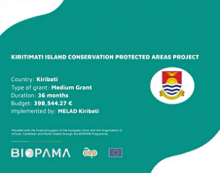
Experiences from the Kiribati Ministry of Environment, Lands and Agricultural Development regarding their medium grant under the EU-ACP BIOPAMA Action Component focusing on management interventions for the Kiritimati Island Conservation Protected Area.
Video - National Protected Areas Forum highlights 2021, Papua New Guinea
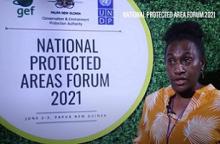
The aim of the National Protected Areas Forum was to fulfill mandates and strengthen policies to protect the country’s abundant natural assets into the future to benefit all life and future generations.
Voluntary Biodiversity Credits: A Guide For Business
This guide aims to help businesses navigate the rapidly evolving voluntary biodiversity credit (VBC) markets and decide
whether and how to engage in VBCs.