Since 2003, Pacific Islands countries and territories have endorsed five-yearly iterations of the Pacific Islands Regional Marine Species Programme and Action Plans for whales and dolphins, marine turtles, seabirds, dugong and sharks and rays.
This report reflects the key outcomes of the 25th PIRT Annual Meeting and is provided for the information of PIRT Members and Working groups, as well as other interested organisations, partners and stakeholders. Call Number: [EL]Physical Description: 53 p.
Carondelet is a remote seamount in the Phoenix Islands of the Republic of Kiribati. Earlier expeditions of the Phoenix Islands Protected Area (PIPA) were not able to survey the seamount due to challenging ocean conditions.
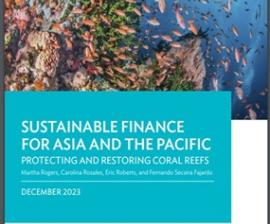
The Asian Development Bank (ADB) and The Nature Conservancy (TNC) are focused on identifying innovative ways to effectively protect and restore critical ecosystems, such as coral reefs, in Asia and the Pacific.
This introductory brief's target audience is professionals from governments, civil society, private sector, and other stakeholders who know multilateral processes and treaties but are not “BBNJ (biodiversity beyond national jurisdiction) experts”. It is an easier
The Pacific Islands Regional Marine Species Programme (Marine Species Programme, or PIRMSP) is a regional strategy for the cooperative conservation and management of dugongs, marine turtles, whales and dolphins, sharks and rays, and seabirds.
Invasive species start as strangers in a strange land but over time come to dominate their new homes. The ocean has played host to some of the most prolific of these infiltrations of our time. So just how are these marine invaders able to adapt and thrive in new neighborhoods?