The international community has made some headway on pledges to protect 30% of the Earth by 2030 but progress must accelerate, the official progress report from the UN Environment Programme World Conservation Monitoring Centre (UNEP-WCMC) and the International Union for Conservation of Nature (IU
Territories and areas conserved by Indigenous peoples and local communities (IPs and LCs), abbreviated as ‘ICCAs’ (Glossary), are defined by the International Union for Conservation of Nature (IUCN) as “natural or modified ecosystems including significant biodiversity, ecological services and cul
This is the first volume in the WCPA Good Practice Guidelines that is predominantly by rangers and for rangers. The editors worked with partners to collect good practices and stories from rangers worldwide, reflecting global experience and lessons learned.
The global race to safeguard irreplaceable ecosystems is nearing a critical threshold, and the window to protect vital areas for climate stability, biodiversity, and human wellbeing is rapidly closing.
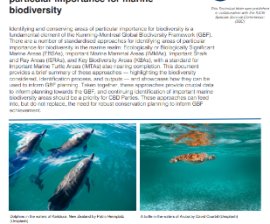
Identifying and conserving areas of particular importance for biodiversity is a fundamental element of the Kunming-Montreal Global Biodiversity Framework (GBF).
We describe below the data and provide an overview of the specific variables that are constructed for the analysis in the papers: “Revisiting Global Biodiversity: A Spatial Analysis of Species Occurrence Data from the Global Biodiversity Information Facility” by Susmita Dasgupta, Brian
There has been a profound shift in attitudes towards the designation and management of site-based conservation over the past 25 years, from being a predominantly science-based, top-down and government-led approach to one that focuses on governance and equity, and is far more variable,
Species do not exist in isolation; they are interconnected. A key element to addressing environmental problems, such as improving water quality and renewing biodiversity, involves addressing nature conservation at its core.
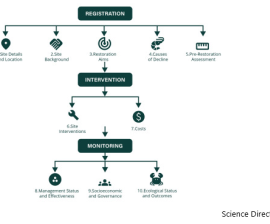
Restoration is a key component of global and national efforts to combat ecosystem degradation, reduce biodiversity loss, and adapt to climate change, and there is currently an impetus to scale up restoration efforts.