Community Based Management resources
Vulnerability of marine megafauna to global at-sea anthropogenic threats
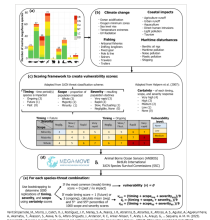
Marine megafauna species are affected by a wide range of anthropogenic threats. To evaluate the risk of such threats, species’ vulnerability to each threat must first be determined.
Vuri Clan Forest Conservation Area Management Plan - Choiseul Province, Solomon Islands
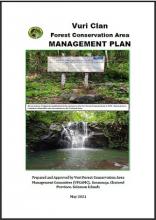
This Management Plan was prepared by the representatives of the Vuri Clan of Sikipozo Tribe in partnership with the Natural Resources Development Foundation (NRDF), Ecological Solutions Solomon Islands (ESSI), World Wide Fund for Nature (WWF-SI), the Ministry of Forestry and Research (National He
Wetland management planning: a guide for site managers
This guide is intended to provide a summary of the steps to develop wetland management planning processes. Improved understanding of how to use these principles and planning steps will help achieve more effective conservation and thus wetland wise use.
What determines the effectiveness of national protected area networks?
More than 15% of global terrestrial area is under some form of protection and there is a growing impetus to increase this coverage to 30% by 2030. But not all protection is effective and the reasons some countries’ protected areas (PAs) are more effective than others’ are poorly understood.
What Will Count?—Evidence for the Global Recognition of Other Effective area–based Conservation Measures
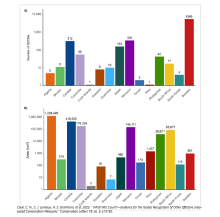
Other effective area–based conservation measures (OECMs) are anticipated to play an important role in progress towards global protection targets, with progress being judged on the basis of the areas reported to the World Database on Other Effective area-based Conservation Measures (WD-OECM).
What ‘paper parks’ reveal about the limits of conservation policy (commentary)
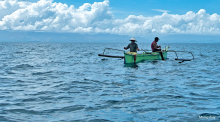
Conservation has no shortage of ambitious policy. Marine protected areas now cover roughly 8% of the world’s oceans. Protected lands account for nearly a fifth of the planet’s terrestrial surface. Community forest concessions span millions of hectares across the tropics.
Why Biodiversity Protection Relies on People-Nature Bonds
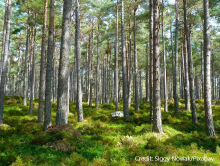
Nurturing people-nature relationships in evolving social-ecological landscapes can slow biodiversity loss and build resilient communities
Biodiversity loss is often framed as a failure of conservation. In reality, it is a failure of relationships.
Why saving seagrass meadows could help save the world’s coastlines
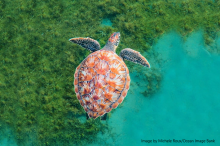
Seagrass meadows might not catch the eye like coral reefs, but they play an important and often unsung role in coastal protection, particularly as climate change increasingly eats away at shorelines.
Wiawi Community Turtle Management Plan
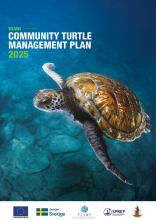
Wiawi is an important turtle-nesting site in Vanuatu known for hawksbill and green turtles.
Working with Nature for Community Climate Adaptation. A guide for facilitating community discussions on nature-based solutions in Pacific Islands
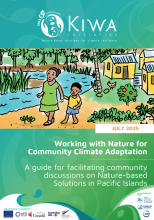
This guide is for starting conversations about the strengths of nature in adapting to challenges of climate change.
World Bank Global Biodiversity Data

We describe below the data and provide an overview of the specific variables that are constructed for the analysis in the papers: “Revisiting Global Biodiversity: A Spatial Analysis of Species Occurrence Data from the Global Biodiversity Information Facility” by Susmita Dasgupta, Brian
World must act faster to protect 30% of the planet: protected and conserved areas need to double on land and triple at sea by 2030
The international community has made some headway on pledges to protect 30% of the Earth by 2030 but progress must accelerate, the official progress report from the UN Environment Programme World Conservation Monitoring Centre (UNEP-WCMC) and the International Union for Conservation of Nature (IU
YUS Landscape Plan 2013-2015
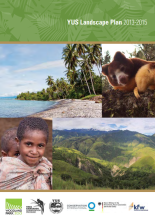
Building on the YUS Conservation Area as the first protected area in Papua New Guinea (PNG) under the PNG Conservation Areas Act, the YUS Landscape Plan is another first for YUS and for PNG.
“Our fish are not your marine biodiversity”: tensions in integrating fisheries into the BBNJ Agreement
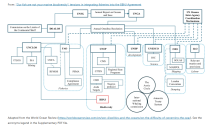
The 2023 Biodiversity Beyond National Jurisdiction (BBNJ) Agreement aims to conserve and sustainably use marine biodiversity in areas beyond national jurisdiction. However, separating fisheries from broader conservation frameworks has led to fragmented governance.
“The children of the Sun and Moon are the gardens”—How people, plants, and a living Sun shape life on Tanna, Vanuatu
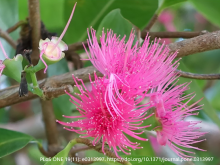
Based on original ethnographic and ethnobotanical research, we share how in the cosmology of Tanna, an island in Vanuatu’s southernmost province of Tafea, the Sun is viewed as a living, interactive being.
“The children of the Sun and Moon are the gardens”—How people, plants, and a living Sun shape life on Tanna, Vanuatu
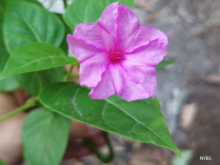
Based on original ethnographic and ethnobotanical research, we share how in the cosmology of Tanna, an island in Vanuatu’s southernmost province of Tafea, the Sun is viewed as a living, interactive being.
𝘾𝙡𝙞𝙢𝙖𝙩𝙚 𝘼𝙙𝙖𝙥𝙩𝙖𝙩𝙞𝙤𝙣 𝙏𝙤𝙤𝙡𝙠𝙞𝙩
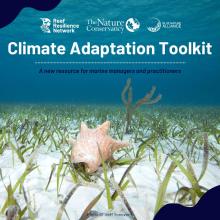
Climate change is rapidly transforming ocean conditions. Rising temperatures and shifting currents are disrupting ecosystems and causing marine species to move in new and often unpredictable ways.